
Color can change how a room looks and feels without requiring a full renovation. The right wall color, artwork, wallpaper, or decorative accent can make a plain space feel warm, fresh, modern, or full of personality. Whether you prefer soft neutral shades or bold colors, there are many ways to create walls that match your home and personal style.
Color wall decor ideas include painted accent walls, colorful canvas art, framed pictures, mirrors, wall decals, wallpaper, and decorative panels. You can use these options in living rooms, bedrooms, kitchens, and bathrooms. The best choice depends on your room size, natural light, existing furniture, and budget.
Add color, texture, and personality to plain walls with these wall hanging decor ideas featuring decorative fabrics, woven pieces, and accents in shades that complement your room.
Table of Contents
What Are the Best Color Wall Decor Ideas for Your Home?
The best color wall decor ideas combine suitable paint colors with canvas art, framed pictures, mirrors, wallpaper, decorative panels, and other accents. Living rooms often benefit from colorful gallery walls or bold accent walls, while bedrooms can feel more relaxing with soft green, muted blue, or warm neutral shades. Kitchens and bathrooms can use colorful prints and suitable wall finishes. To choose the right design, consider your room size, lighting, furniture, personal taste, and budget.
You do not need to paint every wall to create a noticeable change. A few well-placed decorations can add color, texture, and character to your home. The following ideas explain how to choose wall colors and decorations for different rooms, styles, and budgets.
Colorful Wall Decor Ideas for Every Home
Colorful wall decor can make a simple room feel more personal. Start with one main color and add decorations that support it rather than compete for attention.
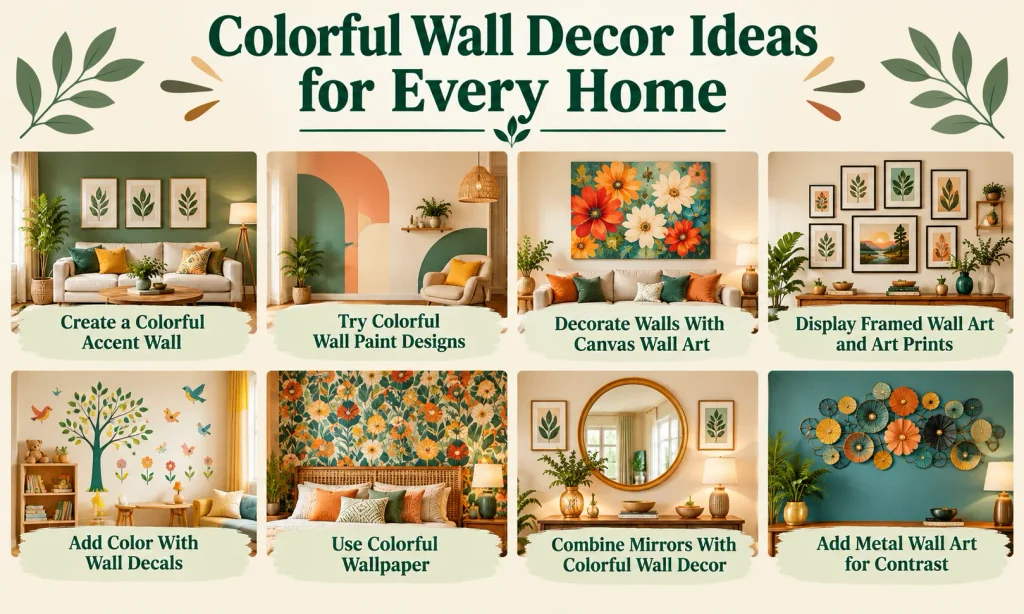
1. Create a Colorful Accent Wall
An accent wall uses a different color or finish from the other walls. It works well behind a sofa, bed, fireplace, or dining table.
Try sage green for a natural look, terracotta for warmth, or deep blue for contrast. Keep the surrounding walls neutral if you want the accent wall to stand out. Before painting, test a sample in daylight and under your usual indoor lighting.
2. Try Colorful Wall Paint Designs
Colorful wall paint designs can add character without the cost of wallpaper or decorative panels. You can use stripes, painted arches, geometric shapes, or two-tone patterns.
For example, a cream wall with a muted green arch can create an attractive background for a reading chair or small shelf. Use painter’s tape for straight lines and measure the design before painting.
3. Decorate Walls With Canvas Wall Art
Canvas wall art is an easy way to add color without changing the wall itself. Abstract paintings, landscapes, floral designs, and simple shapes can work in many rooms.
Choose artwork that includes one or two colors already found in your furniture, curtains, or rugs. A large canvas can suit the space above a sofa, while smaller pieces work well in a reading corner or hallway.
4. Display Framed Wall Art and Art Prints
Framed pictures, posters, and art prints offer many ways to personalize a room. You can combine photographs, illustrations, nature scenes, and colorful patterns.
For a neat appearance, choose frames with similar finishes. If you prefer a relaxed gallery wall, mix different frame sizes while keeping a shared color palette or subject.
5. Add Color With Wall Decals
Wall decals can be useful in rental homes, children’s bedrooms, and spaces that need temporary decoration. Floral shapes, leaves, stars, and geometric patterns can make a plain wall more interesting.
Check whether the decals are suitable for your wall surface. Test a small area first, especially on freshly painted walls, because some adhesives can damage paint when removed.
Create a lively and welcoming atmosphere with these living room wall decor ideas that combine attractive colors, artwork, and decorative accents.
6. Use Colorful Wallpaper
Wallpaper introduces color, pattern, and texture without requiring several separate decorations. Botanical prints, soft stripes, geometric shapes, and textured patterns are common choices.
Use a bold design on one wall if you want a clear focal point. Smaller patterns may suit compact rooms, while larger designs can create a strong feature on a spacious wall.
7. Combine Mirrors With Colorful Wall Decor
Mirrors reflect light and can help a room feel more open. Place a mirror where it reflects natural light or an attractive part of the room.
Round mirrors can soften spaces with many straight lines, while rectangular mirrors suit a more structured layout. You can also combine mirrors with framed art, but leave enough space between the pieces to avoid a crowded appearance.
8. Add Metal Wall Art for Contrast
Metal wall art adds shape and texture to colorful walls. Black metal designs can stand out against pale colors, while warm metallic finishes can complement cream, green, or terracotta walls.
Choose a design that suits the wall size and nearby furniture. Secure heavier pieces with suitable hardware and follow the installation instructions.
Color Combinations for Stylish Wall Decor
Choosing colors that work together can be more challenging than choosing a single wall color. A useful starting point is to select one main shade, one supporting shade, and a smaller accent color.
9. Combine Green and Cream
Sage green, olive green, and other muted greens work well with cream, beige, and natural wood. This combination can suit living rooms, bedrooms, and quiet reading areas.
Add botanical prints or simple wooden frames to support the natural look. Use darker green for contrast if the room has enough light.
10. Pair Blue With White and Warm Neutrals
Blue walls or blue artwork can create a calm and balanced appearance. Pair navy with white for strong contrast, or combine muted blue with beige and light wood for a softer look.
In a living room, blue artwork can connect a neutral sofa to curtains or cushions. In a bedroom, a muted blue accent wall can create a restful background.
Bring a fresh look to your sleeping space with these 25 bedroom wall decor ideas featuring color combinations and wall accents that suit different moods and styles.
11. Use Terracotta With Beige and Muted Green
Terracotta brings warmth to a room. It can work well with sandy beige, cream, natural wood, and muted green.
Try terracotta in a painted arch, framed artwork, or a feature wall. If you are unsure about using it across a large area, begin with a smaller section and repeat the shade in a few accessories.
12. Create a Soft Pink and Gray Palette
Soft pink can work with light gray, white, warm wood, and muted green. This combination can suit bedrooms, dressing areas, and creative spaces.
Use pink as the main wall color or introduce it through artwork. A few matching details are usually enough to connect the room without making every item the same shade.
13. Try Two-Tone Walls and Color Blocking
Two-tone walls use two colors on the same wall, often divided horizontally or through a simple geometric shape. Color blocking uses larger areas of different colors to create a clear design.
For example, a pale neutral wall with a darker lower section can add contrast to a dining area. Painted arches and geometric shapes can also highlight a desk, bed, or small display shelf.
Plan the proportions before painting and test the colors together. The aim is to create a balanced design that works with the furniture and room layout.
Color Wall Decor Ideas for Living Rooms
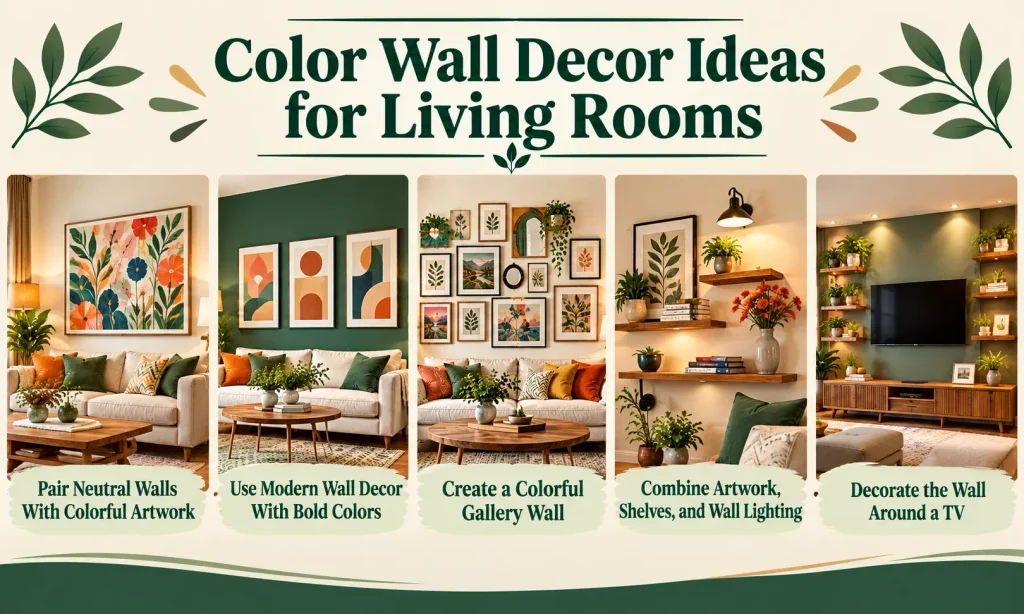
The living room is often where family members relax and guests gather. Its wall decor should connect with the sofa, curtains, flooring, lighting, and other furniture.
14. Pair Neutral Walls With Colorful Artwork
White, beige, and light gray walls provide a simple background for colorful pictures. Add artwork with green, blue, pink, or orange details to make the room feel more lively.
Repeat one color in cushions or a rug to connect the artwork with the rest of the room. This also makes it easier to change your decorations later without repainting.
15. Use Modern Wall Decor With Bold Colors
Modern color wall decor ideas often combine clean shapes with a limited color palette. Try abstract prints, geometric artwork, or a deep green, navy, or rust accent wall.
If your furniture already has strong colors, choose wall decor with fewer shades. This helps the room feel organized rather than crowded.
16. Create a Colorful Gallery Wall
A gallery wall combines framed pictures, photographs, prints, and other lightweight decorations. It can fill the space above a sofa or console table.
Arrange the frames on the floor before hanging them. Keep the spacing fairly even and use a shared color, subject, or frame finish to connect the pieces.
17. Combine Artwork, Shelves, and Wall Lighting
A wall can look more useful when decoration and lighting work together. Place framed art above a picture ledge, add a few small objects, and use suitable wall lighting to highlight the arrangement.
Keep the number of objects limited so that the wall does not feel crowded. Make sure shelves are securely installed and lights are positioned to avoid unwanted glare on framed pictures.
18. Decorate the Wall Around a TV
The wall around a television can become a balanced part of the living room instead of an empty space. Use a simple painted background, a few shelves, or carefully placed framed artwork.
Avoid filling every available space with decorations. Leave enough room around the screen and keep cables organized so the overall arrangement remains neat.
Make your cooking space more inviting with these kitchen wall decor ideas that use attractive colors, creative artwork, and decorative details.
How to Decorate a Large Blank Wall
Large blank walls can be difficult to decorate because small items may look lost, while too many decorations can create clutter. Choose a design based on the wall’s width, height, and nearby furniture.
19. Choose the Right Size of Wall Art
A large piece of artwork can create a clear focal point above a sofa, bed, or console table. Smaller pictures may work better when grouped into a gallery wall.
As a practical starting point, look for artwork that is around two-thirds the width of the furniture below it. This is a flexible decorating guideline, not a strict rule. Check the proportions by marking the proposed artwork size with paper before hanging it.
20. Arrange a Large Gallery Wall
A gallery wall can fill a wide space with photographs, framed prints, paintings, or illustrations. You can use matching frames for a clean look or mix sizes for a more relaxed arrangement.
Start by choosing a central piece, then place the other frames around it. Maintain consistent spacing and check the overall outline before making holes in the wall.
21. Add Color With Picture Ledges and Shelves
Picture ledges allow you to display framed artwork without permanently fixing every picture in place. You can change the arrangement when you want a new look.
Use shelves to combine artwork with a small number of decorative objects. Avoid overcrowding them, and make sure the shelf and mounting hardware can support the total weight.
Textured and Decorative Color Wall Designs
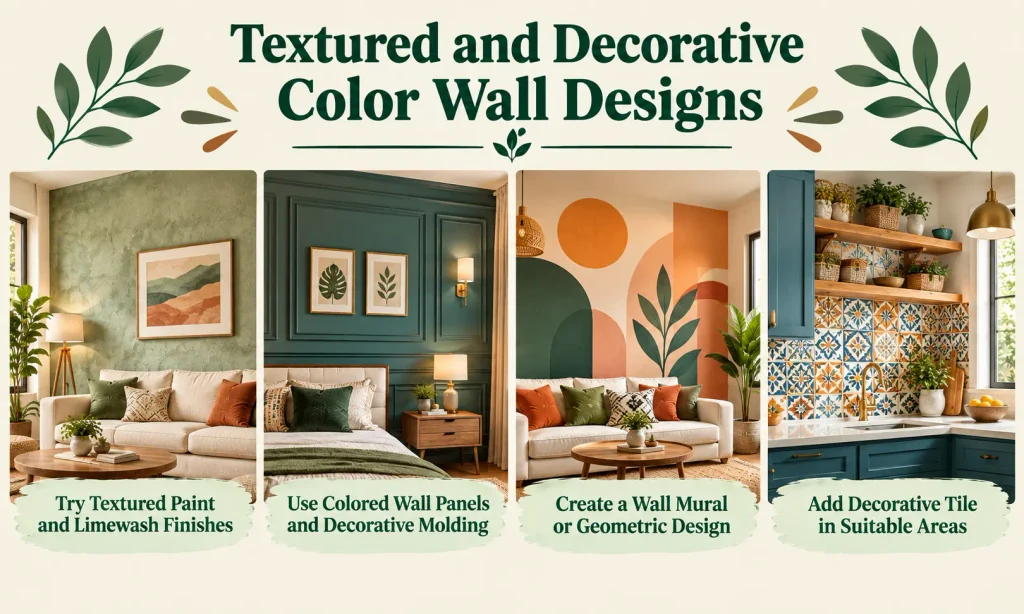
Paint is not the only way to add color. Different materials can create texture, depth, and visual interest while keeping the room connected to your chosen color palette.
22. Try Textured Paint and Limewash Finishes
Textured finishes can give a wall a softer or more layered appearance than ordinary flat paint. Some limewash-style finishes create gentle variations in tone, while other textured paints produce a more noticeable surface effect.
Test the finish on a sample board or small area first. Results depend on the product, surface preparation, application method, and lighting, so follow the manufacturer’s instructions.
23. Use Colored Wall Panels and Decorative Molding
Wall panels and decorative molding add structure to a wall. You can paint them the same color as the surrounding surface for a subtle effect or choose a contrasting shade to make the design stand out.
Colored wood panels can suit bedrooms, living rooms, and dining areas. Before installation, check the wall condition, room moisture levels, and material requirements.
24. Create a Wall Mural or Geometric Design
A mural can turn a plain wall into a feature with flowers, landscapes, abstract shapes, or simple patterns. Geometric designs are useful if you want a more structured look.
Choose a design that suits the room and does not compete with large furniture or busy flooring. If painting a mural feels too difficult, use a simple repeating shape or a suitable wallpaper instead.
25. Add Decorative Tile in Suitable Areas
Decorative tile can introduce color and pattern to kitchen backsplashes, bathroom walls, and other suitable surfaces. It is a practical option where the material is rated for the conditions.
Choose colors that work with the cabinets, countertops, or bathroom fittings. Use appropriate installation materials and follow product guidance for wet areas.
Create a relaxed, artistic atmosphere with these boho wall decor ideas featuring earthy tones, warm colors, and natural textures.
Bedroom Wall Decor Ideas With Color
Bedroom wall decor should support a comfortable and personal atmosphere. Paint, artwork, fabric hangings, and decorative accessories can help create a style that suits your taste.
26. Create a Pink Bedroom Accent Wall
Soft pink can work well behind a bed, especially when paired with cream, white, light wood, or warm gray. Add framed artwork or simple wall lights to complete the arrangement.
For a more modern look, consider dusty pink instead of a very bright shade. You can also add pink through prints and cushions rather than painting the entire wall.
27. Try Green Wall Decor Behind the Bed
Green wall decor can bring a natural feel to a bedroom. Sage green works well with pale wood and neutral bedding, while darker green creates more contrast.
A painted wall behind the headboard can provide a clear focal point. If you prefer not to paint, choose botanical prints, green abstract artwork, or framed nature photographs.
28. Decorate Purple Walls With Matching Artwork
Purple walls can look balanced when paired with soft white, beige, gray, or natural wood. Light lavender may suit a gentle bedroom style, while darker purple creates a stronger effect.
Choose artwork with a few related shades instead of trying to match every item exactly. Warm lighting can also help create a comfortable atmosphere.
29. Add Colorful Wall Decor for Kids
Children’s rooms are good places to use playful colors, illustrations, and easy-to-change decorations. Wall decals, colorful posters, animal prints, and simple painted shapes can make the space feel personal.
Pink, lavender, blue, green, and yellow are all possible choices, depending on the child’s interests. Removable decorations can also make it easier to update the room as their tastes change.
Colorful Wall Decor Ideas for Kitchens and Bathrooms
Kitchens and bathrooms can benefit from thoughtful wall color, too. Choose decorations that suit the room’s size, moisture levels, and daily use.
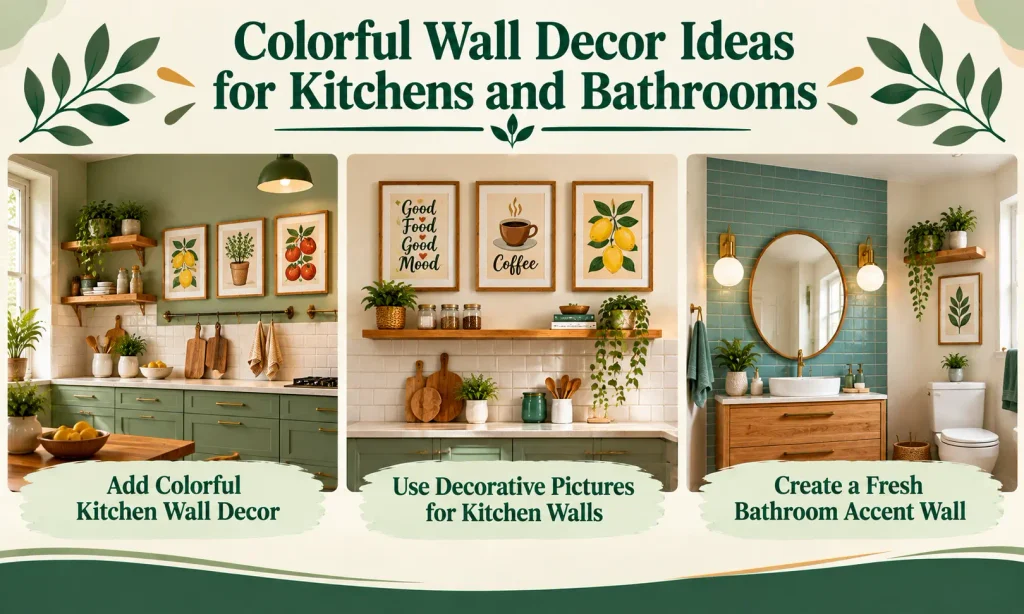
30. Add Colorful Kitchen Wall Decor
Colorful kitchen wall decor can include framed food illustrations, botanical prints, small shelves, or a painted feature wall away from cooking splashes.
Green, warm yellow, blue, and terracotta can work with many kitchen styles. Match the wall decor with cabinet finishes, countertops, or other details to keep the room visually connected.
31. Use Decorative Pictures for Kitchen Walls
Decorative pictures for the wall can add character without taking up counter space. Try coffee illustrations, fruit prints, herb artwork, or simple food-themed designs.
Place framed pictures away from direct heat and areas where grease or steam can collect. Choose easy-to-clean frames and suitable hanging hardware.
32. Create a Fresh Bathroom Accent Wall
A bathroom accent wall can use suitable paint, tile, or decorative materials designed for damp spaces. Soft blue, sage green, and warm white can create a fresh appearance.
Avoid placing ordinary paper artwork or unsuitable materials where they will receive direct water or constant moisture. Follow product instructions and make sure the room has suitable ventilation.
Simple and Affordable Color Wall Decor Ideas
You do not need a large budget to improve an empty wall. A few well-chosen items can make a noticeable difference when their size, color, and placement suit the room.
33. Decorate a Blank Wall With a Small Gallery
A blank wall can become a feature with three to five coordinated prints. Choose a shared theme, such as landscapes, abstract shapes, or family photographs.
Use paper templates to test the arrangement before making holes. Keep the group at a comfortable viewing height and leave enough space around nearby furniture.
34. Create DIY Colorful Wall Art
DIY wall art lets you create decorations that match your chosen color palette. Paint simple shapes on canvas, arrange colored paper in a frame, or create a pattern with craft materials.
Choose materials that are suitable for the room and secure enough to stay in place. For children’s rooms, avoid small loose parts that could create a choking risk.
35. Hang Wall Decor Without Nails
Hanging wall decor without nails can be useful in rental homes or spaces where you want to avoid holes. Removable adhesive strips, hooks, and picture-hanging products may work for lightweight decorations.
Check the stated weight limit, wall surface requirements, and removal instructions before use. Textured paint, wallpaper, damp surfaces, and heavy frames may not be suitable for every adhesive product.
36. Refresh Old Frames With New Colors
Old frames can look different with a fresh coat of paint. Try black for contrast, white for a clean look, or a shade that matches your artwork.
Clean the frame and use a suitable primer or paint for its material. Allow it to dry fully before adding the picture and hanging it.
37. Plan a Wall Decor Project Under $60
A budget of $60 may cover several simple wall updates, depending on local prices and the products you choose. You could refresh an old frame, create DIY artwork, or combine a few inexpensive prints.
Before spending money, measure the wall and list the items you need. Include paint, tools, hanging materials, and delivery costs when relevant. A small, coordinated arrangement can look better than many unrelated items bought on sale.
How to Choose the Best Wall Colors for Your Home
The best wall color is one that works with your room and the way you use it. Before buying paint or decorative items, consider your furniture, lighting, room size, and preferred style.
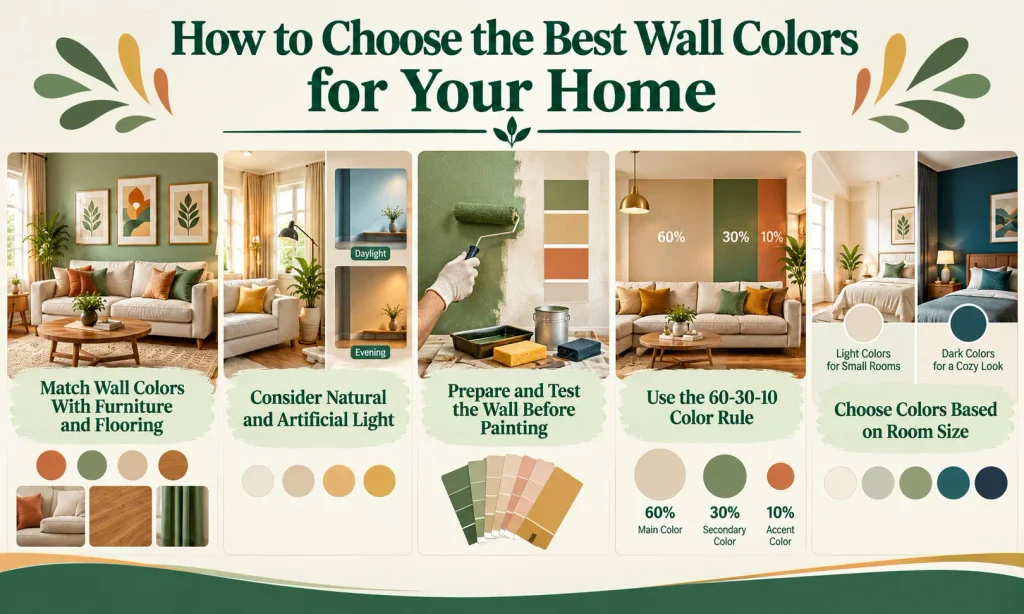
Match Wall Colors With Furniture and Flooring
Look at your sofa, bed, curtains, flooring, and larger furniture first. Choose a wall color that connects these elements rather than competing with them.
Warm wood and beige furniture may work well with terracotta or sage green. Gray furniture may pair with blue, white, or muted pink, depending on the overall look.
Consider Natural and Artificial Light
Light changes how paint colors appear. A shade may look warmer in sunlight and cooler under certain indoor bulbs.
Test a sample on more than one part of the wall. Check it during the day and evening before choosing the final color.
Prepare and Test the Wall Before Painting
A good paint result begins with a suitable surface. Remove loose dirt, repair minor damage, and allow the wall to dry before painting. Follow the paint instructions for primer, surface preparation, and drying time.
Apply sample colors to a small area or sample board and view them under different lighting. This simple step can help you avoid choosing a shade that looks different from what you expected.
Use the 60-30-10 Color Rule
The 60-30-10 rule is a common decorating guide for balancing colors. Use one main color for roughly 60% of the room, a second color for about 30%, and an accent color for the remaining 10%.
These percentages are a starting point, not a strict requirement. Adjust them to suit your room, furniture, and personal taste.
Choose Colors Based on Room Size
Light colors such as soft white, pale beige, and light gray can help a room feel more open, especially when natural light is limited. Dark colors can create a cozy, dramatic look, but their effect depends on lighting and layout.
Do not avoid darker shades automatically. Test them in your space and balance them with suitable lighting, lighter furniture, or reflective surfaces.
How to Decorate Walls With Different Colors
Different wall colors call for different types of artwork and accessories. The right combination can make the wall feel coordinated without making every item match exactly.
How to Decorate a Red Wall
Red is a strong color, so pair it with simple artwork, neutral frames, or small touches of black and natural wood. White and cream can soften the overall look.
How to Decorate Purple Walls
Purple can work with white, gray, beige, or metallic accents. Use artwork with related colors to connect the wall to the rest of the room.
How to Decorate a Pink Wall
Pink walls pair well with white frames, botanical prints, warm wood, and muted green accents. For a balanced look, repeat pink in just a few accessories.
How to Decorate Green and Blue Walls
Green and blue walls work with nature prints, abstract artwork, and neutral decorative pieces. Light-colored frames can stand out against darker shades, while wood finishes can add warmth.
Frequently Asked Questions About Color Wall Decor Ideas
What Are Some Unique Wall Decor Ideas?
Unique wall decor ideas include colorful accent walls, oversized canvas art, mixed-frame gallery walls, decorative mirrors, painted arches, textured finishes, and metal wall sculptures. Choose one main feature and build the rest of the arrangement around it.
What’s in Style for Wall Decor?
Popular decorating approaches include nature-inspired colors, personal gallery walls, textured finishes, large artwork, and simple geometric designs. Trends change over time, so choose materials and colors that suit your home rather than following every new look.
How Do You Decorate a Wall?
Start by deciding what the wall needs, such as color, artwork, storage, or texture. Measure the space, choose a main feature, and test its placement before painting or hanging anything. Keep the scale and colors connected to the rest of the room.
What Are Some Good Wall Color Ideas for My Home?
White, beige, sage green, muted blue, soft pink, and terracotta are useful starting points. The right choice depends on lighting, furniture, room size, and your preferred style. Test paint samples before making a final decision.
Which Wall Color Makes a Room Look Bigger?
Light shades such as soft white, pale beige, and light gray can help a room feel more open. Good lighting and less visual clutter can also help. However, room size alone should not determine your color choice.
How Can I Decorate a Blank Wall Without Nails?
Try suitable removable adhesive hooks, picture strips, lightweight decals, or artwork placed on a shelf. Check the surface and weight limits before using adhesive products, and follow the removal instructions to reduce the risk of wall damage.
How Do I Choose Wall Art for a Large Wall?
Choose artwork that suits the size of the wall and the furniture below it. One large piece can create a clear focal point, while a gallery wall can fill a wider area. Test the layout with paper templates before hanging the pieces.
How Can I Add Color Without Painting?
Use colorful framed pictures, canvas art, removable decals, decorative mirrors, fabric hangings, or accessories displayed on shelves. These options can change the look of a room without requiring a permanent paint update.
Final Thoughts
Color wall decor ideas offer many ways to make a home feel more personal. From colorful living room artwork and green bedroom walls to textured finishes, kitchen prints, and affordable DIY projects, you can create a look that suits your space without a full renovation.
Start with one wall, choose colors that work with your existing furniture, and add decorations that fit the room’s size and purpose. Test paint colors before committing, use suitable hanging methods, and keep the arrangement balanced. With careful planning, even a plain wall can become an attractive part of your home.