
Wood wall decor is a way to decorate walls with wooden artwork, decorative panels, shelves, carved designs, and handmade pieces. It adds warmth, natural texture, and character to a home. Popular wood wall decor ideas include wooden slat walls, geometric wood art, reclaimed wood displays, floating shelves, and natural wood panels.
The best wood wall decor depends on your room size, interior style, wall color, and budget. Light wood can create a bright, relaxed look, while dark wood adds contrast. You can use large wooden wall art as a focal point in the living room, simple wooden decorations in the bedroom, or small DIY wood wall art in an entryway.
In this guide, you will find 15 practical wood wall decor ideas, room-by-room inspiration, material comparisons, beginner-friendly DIY projects, and tips for choosing, hanging, and maintaining wooden decorations.
What Is Wood Wall Decor?
Wood wall decor includes decorative objects, wooden artwork, shelves, panels, and other features used to improve the appearance of an interior wall. These items can be made from solid wood, reclaimed timber, plywood, wood veneer, or engineered wood.
Wood adds texture that paint alone cannot provide. Its natural grain, color, and shape can help a room feel warmer and more complete.
Wood Wall Decor vs. Wooden Wall Art
Wood wall decor is a broad term that covers wooden shelves, decorative panels, framed mirrors, wall hangings, and carved designs. Wooden wall art usually refers to pieces made mainly for display, such as geometric patterns, abstract shapes, and handmade artwork.
Both options can work together. For example, a living room might have a wooden slat wall, a piece of wood art above the sofa, and a small shelf displaying plants.
Complement natural wood accents with these wall art decor ideas to add color, personality, and visual interest to your walls.
Why Choose Wooden Wall Decor?
Wooden wall decor is versatile and can suit many budgets and room sizes. Small framed pieces can add detail without changing the whole room, while larger panels can create a strong focal point.
Wood also pairs well with other materials, including metal, glass, fabric, stone, and plants. Choosing the right finish and placement helps the decoration feel connected to the rest of your home.
15 Wood Wall Decor Ideas for Every Home
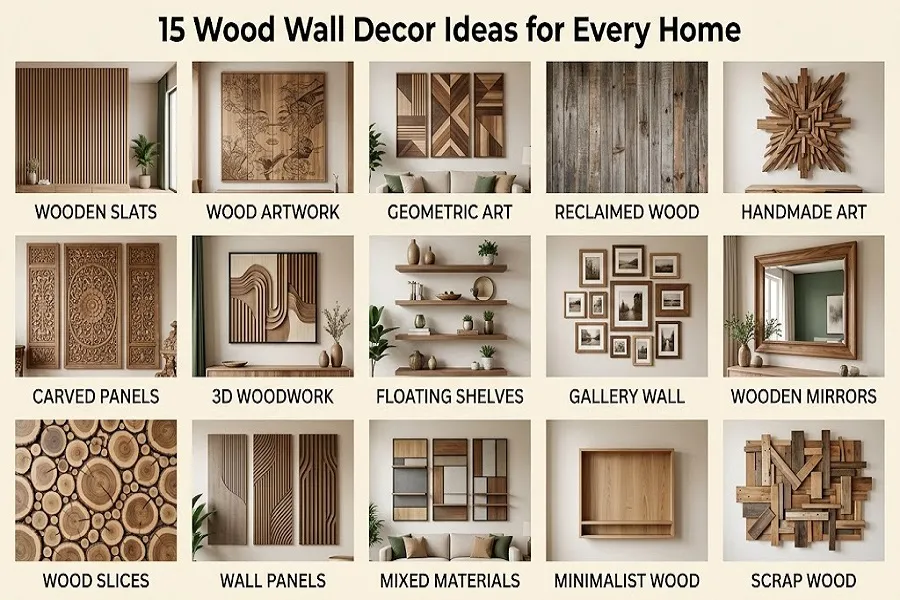
1. Create a Wooden Slat Accent Wall
A wooden slat accent wall adds lines, texture, and a modern look to a plain surface. Narrow wooden strips can be arranged vertically or horizontally, depending on the effect you want. Natural wood tones work well with white, cream, beige, and soft gray interiors.
You can install slats behind a television, behind a bed, or along one wall in the living room. Using slats on a single wall usually creates a clearer focal point than covering the entire room.
Best for: Modern living rooms, bedrooms, and home offices.
2. Hang Large Wood Wall Art
Large wood wall art can make an empty wall feel complete without requiring many smaller decorations. A wide wooden artwork above a sofa, bed, or console table can connect the furniture with the open wall space.
Choose a design that suits the room’s colors and furniture. Natural wood creates a warm look, while dark finishes and geometric patterns provide stronger contrast. Measure the wall before choosing a piece so the artwork does not look too small or too large.
Best for: Living rooms, dining rooms, and bedrooms with large empty walls.
3. Arrange Geometric Wooden Wall Art
Geometric wood wall art uses shapes such as circles, triangles, squares, and straight lines to create a balanced design. It can add visual interest without using bright colors or complicated patterns.
For a simple look, choose two or three related wood tones. You can also combine natural wood with black details for a more modern finish. If you plan to hang several pieces together, arrange them on the floor first to check their spacing.
Best for: Contemporary interiors, home offices, and minimalist rooms.
4. Add Reclaimed Wood for Rustic Character
Reclaimed wood has been used before and then prepared for another purpose. Its grain, marks, and color variations can give a wall a rustic and natural appearance.
You can use reclaimed timber for framed artwork, small wall panels, or handmade decorative displays. Pair it with neutral walls, simple furniture, and soft fabrics to keep the room balanced. Before using old wood indoors, check it for insects, mold, loose nails, and potentially harmful coatings.
Best for: Rustic homes, farmhouse-style rooms, and interiors with natural materials.
5. Display Handmade Wood Wall Art
Handmade wood wall art gives your home a personal touch. It can include carved designs, layered wooden shapes, small sculptures, or simple artwork made from different pieces of timber.
You do not need a complicated design to create an attractive display. A clean shape, smooth finish, and suitable placement can make a simple wooden piece stand out. If you make your own artwork, sand rough edges and use a finish intended for indoor use.
Best for: Personal spaces, creative interiors, and handmade decor displays.
Pair wooden wall decor with these wall mirror decor ideas to reflect light and create a brighter, more inviting room.
6. Use Carved Wooden Wall Panels
Carved wooden wall panels add texture through raised patterns, cutouts, or decorative lines. They can make a plain wall more interesting without relying on several separate decorations.
A carved panel can work behind a bed, in a dining area, or on a living room feature wall. Detailed designs often look best against simple walls and furniture. Remember that carved surfaces may collect more dust than smooth panels, so consider how easily you can clean them.
Best for: Feature walls, bedrooms, and rooms with simple furniture.
7. Create Three-Dimensional Wood Wall Art
Three-dimensional wood wall art uses raised shapes, overlapping pieces, or layered materials to create depth. Unlike flat artwork, it can produce changing shadows as the light moves around the room.
This style works well on a plain wall where the artwork can stand out. Consider the size and depth of the piece before hanging it, especially in narrow hallways or busy walkways. Larger designs should have a secure mounting system suited to their weight.
Best for: Modern living rooms, entryways, and contemporary interiors.
8. Add Floating Wooden Shelves
Floating wooden shelves offer both decoration and storage. They can hold small plants, framed pictures, books, pottery, and other objects that suit the room.
Choose a shelf finish that works with your furniture and keep the arrangement simple. A few objects with different heights usually look more balanced than a shelf filled from end to end. Check the wall type, mounting hardware, and weight limits before placing objects on the shelf.
Best for: Small rooms, home offices, living rooms, and entryways.
9. Build a Wooden Gallery Wall
A wooden gallery wall combines several pieces of artwork, wooden frames, or small decorative objects into one arrangement. It can create a personal display without requiring one large statement piece.
For a coordinated appearance, use similar frame finishes and consistent spacing. You can mix framed prints, small mirrors, and wooden artwork as long as the pieces share a few colors or shapes. Plan the layout before hanging anything to avoid unnecessary holes in the wall.
Best for: Stairways, hallways, living rooms, and personal display areas.
10. Use a Wood-Framed Wall Mirror
A wood-framed mirror adds decoration while reflecting light and showing more of the room. Round frames can soften a space with many straight lines, while rectangular frames often work well above a console table or dresser.
Natural wood frames suit relaxed interiors, while dark frames can create contrast against pale walls. Place the mirror where it reflects a window, a plant, or an attractive part of the room rather than a cluttered corner.
Best for: Entryways, bedrooms, dressing areas, and small living rooms.
11. Try Natural Wood Slices and Branches
Wood slices and prepared branches can bring organic shapes into your wall decor. A group of wood slices can create a simple pattern, while carefully arranged branches can become a natural wall hanging.
These pieces work well with rustic, boho, and nature-inspired interiors. Use clean, dry wood that is free from mold and insects. Check the weight and shape before choosing the mounting method, as uneven pieces may need more secure support than flat artwork.
Best for: Nature-inspired rooms, reading corners, and rustic interiors.
12. Install Decorative Wood Wall Panels
Wooden wall decor panels can cover part of a wall or create a continuous feature across a larger surface. Options include flat panels, slatted designs, grooved surfaces, and carved patterns.
Panels can define a living room feature wall, frame a television area, or add texture behind a bed. Before installation, check the material, weight, thickness, and fixing requirements. Bathrooms and other damp areas need materials and finishes suitable for those conditions.
Best for: Living room feature walls, bedrooms, and larger interior spaces.
13. Mix Wood with Metal or Fabric
Combining wood with metal or fabric can create a layered look. Wood provides natural texture, metal adds contrast, and fabric can make the arrangement feel softer.
For example, natural wooden artwork with black metal details can suit a modern room. A wooden frame with woven fabric may work better in a relaxed interior. Repeat a few materials from the furniture or accessories so the wall decor feels connected to the room.
Best for: Eclectic interiors, modern homes, and rooms with mixed materials.
14. Create a Minimalist Wooden Wall Display
Minimalist wood wall decor focuses on simple shapes, clean lines, and open space. One wooden sculpture or a small group of natural wood pieces can decorate a wall without making it feel crowded.
This approach works especially well in small rooms and modern interiors. Choose a design that complements the furniture, then leave enough space around it to make the artwork stand out.
Best for: Small apartments, minimalist bedrooms, and simple home offices.
15. Turn Scrap Wood into DIY Wall Art
Scrap wood can become attractive wall art when the material is clean, dry, and in good condition. You can arrange short pieces into geometric patterns, create a framed display, or make a simple wooden hanging.
Plan the design before joining the pieces, then smooth rough edges and remove dust. Use suitable adhesives or fasteners and allow finishes to cure according to their instructions. Avoid wood with unknown harmful coatings, insect damage, or signs of decay.
Best for: Budget-friendly decorating, beginner DIY projects, and creative home improvements.
Wood Wall Decor Ideas for Each Room
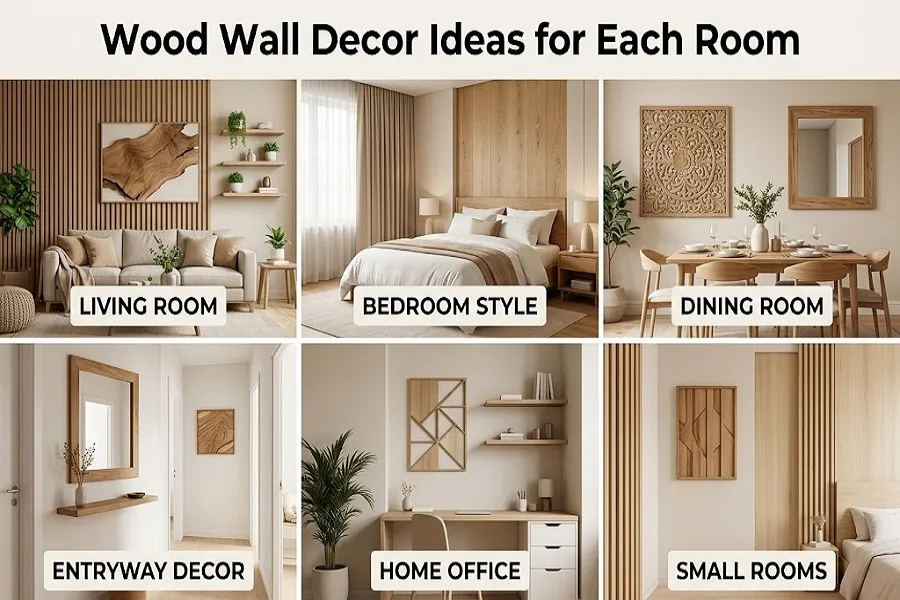
Wood Wall Decor for the Living Room
The living room is a natural place for statement wooden wall art because it is where family members gather and guests spend time. A large piece above the sofa can create a focal point, while slat panels behind a television can add texture.
For a lighter look, combine a small wooden artwork with floating shelves and a few plants. Keep the decoration in proportion to the furniture, and leave enough empty wall space to prevent the room from feeling crowded.
Wood Wall Decor for the Bedroom
The wall behind the bed is a useful place for wooden wall decor. A slatted feature wall, a pair of wooden artworks, or a simple natural wood panel can create a calm setting.
Light wood works well with white bedding and beige curtains, while darker wood creates more contrast. Secure heavy artwork properly, especially when it is positioned above the bed.
Visit Home Floret for more home decor inspiration, interior styling tips, and ideas for beautiful indoor and outdoor spaces.
Wood Wall Decor for the Dining Room
Wooden wall decor can make a dining area feel warm and welcoming. A framed mirror, carved panel, or small gallery wall can work near the dining table.
If the table already has a strong wood grain, choose wall decor that complements it rather than competing with it. Keep decorations clear of chair movement and walking areas.
Wood Wall Decor for the Entryway and Hallway
A wooden mirror, narrow shelf, or small handmade artwork can make an entryway feel more organized and inviting. In a hallway, choose slim decorations that do not extend too far into the walking space.
A shelf can hold everyday items, but keep it tidy. Lighter wood finishes may also help a dark hallway feel brighter.
Wood Wall Decor for the Home Office
Wooden wall art can make a home office feel comfortable without adding unnecessary clutter. Simple geometric pieces, narrow shelves, and natural wood finishes work well with white desks, neutral walls, and black accessories.
Keep busy patterns away from your main line of sight if they distract you while working. Use shelves for items you need and limit decorative objects to a few well-chosen pieces.
Wood Wall Decor for Small Rooms
Small rooms often benefit from one main piece rather than many separate decorations. Choose compact wooden artwork, a narrow shelf, or a simple vertical slat feature.
Light finishes can help preserve an open feel. Avoid bulky pieces that interfere with movement or make the room feel crowded.
Modern Wood Wall Art Styles and Designs
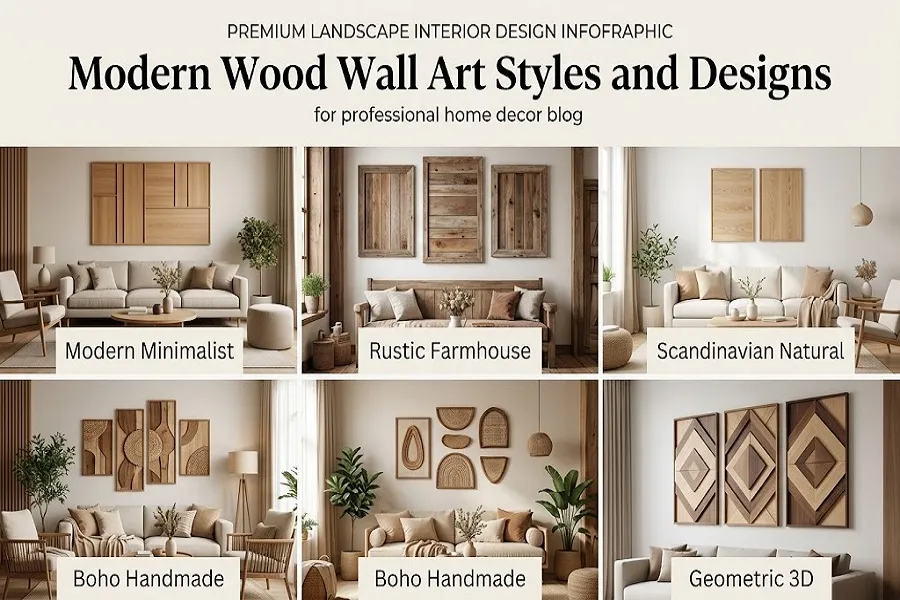
Modern and Minimalist Wood Wall Art
Modern wood wall art often uses simple shapes, straight lines, and limited colors. Geometric artwork and smooth wooden panels can create a clean look without overwhelming the room.
Rustic and Farmhouse Wood Wall Decor
Rustic wooden wall decor uses visible grain, natural texture, and sometimes weathered finishes. Reclaimed wood and handmade frames work well with neutral fabrics and simple furniture.
Scandinavian and Natural Wood Decor
Natural wood decor often suits bright rooms with simple furniture and a calm color palette. Light wood, white walls, and a little greenery can create a fresh, balanced appearance.
Boho and Handmade Wooden Wall Art
Boho-inspired wall decor can combine handmade wood art with woven textures, plants, and natural fabrics. Keep a few colors consistent throughout the room so the different materials feel connected.
Contemporary Geometric and 3D Designs
Contemporary designs use layered shapes, repeated patterns, and raised surfaces to create visual interest. These pieces often look best on a plain wall with enough light to show their texture.
How to Choose the Right Wood Wall Decor
Choose a Style That Matches Your Room
Look at the furniture, flooring, wall color, and accessories already in the room. Modern furniture may suit geometric wood art, while natural fabrics and textured finishes may pair well with rustic or handmade pieces.
The goal is not to match everything exactly. A little contrast can make the room more interesting.
Select the Right Size and Shape
Measure the wall and the furniture below it before choosing artwork. As a starting point, a piece above a sofa often looks balanced when it spans around two-thirds of the sofa’s width. This is a design guideline, not a strict rule.
For several smaller pieces, test the layout on the floor before hanging them. Paper templates can help you check spacing and placement.
Match Wood Tones with Furniture and Flooring
Wood finishes do not need to match perfectly, but their colors should work together. Warm wood often pairs well with cream and beige, while darker finishes can provide contrast against pale walls.
If your room already has several wood tones, repeat one of them in the wall decor or choose a clear contrasting finish.
Choose Between Light, Medium, and Dark Wood
Light wood often creates a bright, relaxed look. Medium wood offers warmth, while dark wood can make a wall feel more dramatic.
Consider the size of the room and its natural light. A large dark panel may feel heavy in a dim room, while a darker finish can create a strong focal point in a bright interior.
For a modern contrast to natural wood textures, explore these metal wall decor ideas for adding depth and character to your walls.
Consider Wall Color and Lighting
Wood can look different under daylight and artificial lighting. Test a sample against the wall if possible, and check it at different times of day.
Natural wood can stand out against white, cream, or dark green walls. Black wood wall decor can provide a clear contrast against lighter paint.
Types of Wood and Materials for Wall Decor
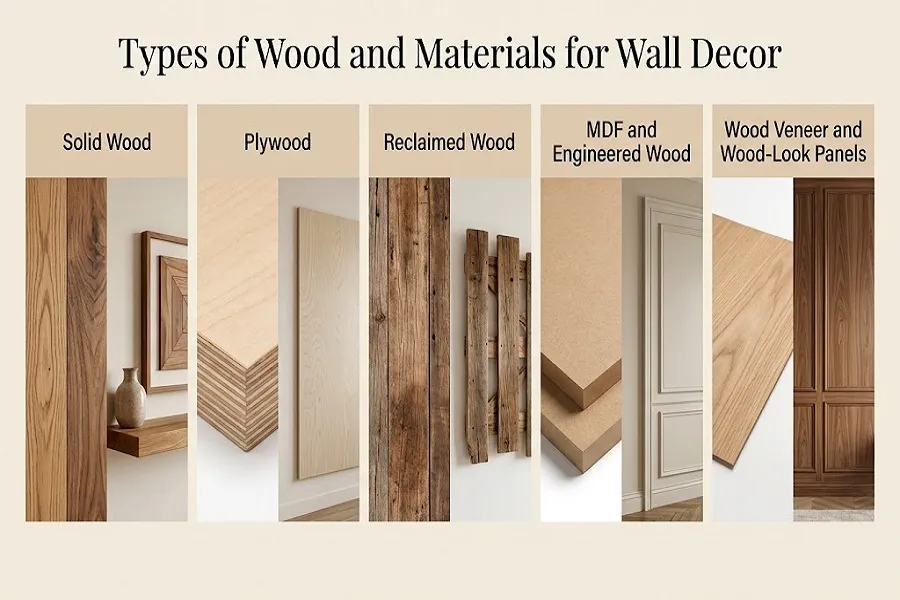
Solid Wood
Solid wood is natural timber with its own grain and color variation. It can be used for shelves, frames, carved artwork, and decorative panels.
Wood can expand or contract as humidity changes, so proper preparation, finishing, and installation matter.
Plywood
Plywood is made from thin layers of wood bonded together. It can work well for shaped artwork, decorative bases, and some wall panels.
The visible surface depends on its grade and finish. Some plywood needs sanding, paint, veneer, or edging before it is ready for display.
Reclaimed Wood
Reclaimed wood gives old timber another use and can add a weathered appearance to wall decor. Its condition varies, so check for pests, mold, damage, and unknown coatings before bringing it indoors.
MDF and Engineered Wood
Medium-density fiberboard, or MDF, is made from wood fibers and a binder. It can provide a smooth surface for painted artwork and decorative panels.
Moisture resistance depends on the specific product. Use the material only in conditions allowed by its instructions, and control dust when cutting or sanding it.
Wood Veneer and Wood-Look Panels
Wood veneer is a thin layer of real wood applied to another material. Wood-look panels use surfaces designed to resemble wood grain.
Both can provide a wood-style appearance, but their durability and moisture performance depend on the material and finish. Check the product specifications before selecting a panel for a particular room.
DIY Wood Wall Art Ideas for Beginners
Make Simple Geometric Wood Wall Art
Choose a wood base, small wooden pieces, measuring tools, sandpaper, and suitable adhesive or fasteners.
- Draw a simple pattern using triangles, squares, or straight lines.
- Arrange the pieces before attaching them.
- Smooth rough edges and remove dust.
- Secure the pieces using a suitable method.
- Apply an indoor-appropriate finish if needed.
- Let the finish cure fully before hanging the artwork.
Start with a small design so it is easier to handle and mount.
Create a Reclaimed Wood Display
Choose clean, dry timber from a suitable source. Arrange pieces of different lengths into a balanced pattern, then prepare the surface and remove loose material.
Use a stable backing if the design needs one. Avoid wood with mold, insect damage, or unknown hazardous coatings.
Build a Small Wooden Gallery Wall
Choose several small frames or wooden artworks with a shared color or finish. Arrange them on the floor first, measure the gaps, and mark their positions on the wall.
Use suitable mounting hardware and check that each piece is level. Keep the arrangement compact enough to feel like one connected display.
Make a Simple Wooden Wall Hanging
Use a smooth wooden strip or prepared wooden shape with a suitable hanging system. Add lightweight decorative elements only when the support can safely carry them.
Do not rely on weak adhesive, ordinary tape, or string that is not suitable for the item’s weight. Check every connection before mounting the finished piece.
Tools, Materials, and Safety Tips
Basic DIY projects may require a measuring tape, pencil, sandpaper, adhesive, and mounting hardware. More complex projects may need cutting tools and clamps.
Wear eye protection and control dust when cutting or sanding wood. Follow the instructions for tools, adhesives, paints, and finishes. If you do not have the right equipment or experience, use pre-cut pieces or ask a qualified professional to handle difficult work.
How to Hang and Maintain Wooden Wall Decor
Prepare the Wall and Measure the Layout
Check the wall for loose paint, damage, dampness, and uneven surfaces. Measure the intended position and use a level to keep panels and frames straight.
Before drilling, check for hidden electrical wires and pipes. If you are unsure where they are located, seek professional advice.
Choose Suitable Wall Anchors and Fasteners
The correct fixing depends on the item’s weight and the wall material. A fixing designed for solid masonry may not work in a hollow wall.
Follow the mounting system’s instructions and weight limits. Heavy wooden wall art may need structural support. If the item is difficult to mount securely, ask a qualified installer for help.
Clean and Protect Wood Finishes
Dust wooden wall decor with a soft, dry cloth. Follow the care instructions for painted, stained, natural, or veneered surfaces.
Avoid excessive water and harsh cleaners. Test any cleaning product on a hidden area before using it on the visible surface.
Prevent Moisture Damage and Warping
Excess moisture can cause wood to swell, warp, or develop finish damage. Keep wooden decor away from leaks and persistent dampness.
For kitchens and bathrooms, use materials and finishes suitable for the expected moisture levels. Address dampness before installing decorative panels rather than covering the problem.
Common Wood Wall Decor Mistakes to Avoid
Choosing Artwork That Is Too Small
Small artwork can look disconnected above a large sofa or bed. Measure the available space and choose a piece or group of pieces that relates to the furniture below it.
Mixing Too Many Wood Tones
Different finishes can work together, but too many unrelated tones may make the room feel disorganized. Choose one main tone and use another for contrast when it suits the design.
Overcrowding the Wall
Too many shelves, panels, and artworks can make a room feel busy. Choose a main focal point and leave some open space around it.
Ignoring Weight, Wall Type, and Moisture
A decoration should be suitable for both the wall and the room. Check the mounting requirements, use appropriate fixings, and address dampness before installing wooden panels or artwork.
FAQs About Wood Wall Decor
Q1. What Is the Best Wood for Wall Decor?
There is no single best wood for every project. Solid wood offers natural grain, plywood can work well for shaped artwork, and MDF can suit smooth painted designs. The right option depends on the appearance, weight, budget, and room conditions.
Q2. Is Wood Wall Art Still in Style?
Wood wall art remains a versatile option because it suits many interior styles. Natural finishes, geometric designs, decorative slats, and carved panels can work in both modern and traditional homes.
Q3. How Do You Decorate a Wall With Wood?
Start by choosing the purpose of the decoration. You can hang wooden artwork, install decorative panels, add floating shelves, or create a gallery wall. Measure the space, select a suitable finish, and plan the layout before installation.
Q4. What Is the Difference Between Wood Wall Art and Wood Paneling?
Wood wall art usually consists of decorative pieces attached to a wall. Wood paneling covers part or all of the wall surface and creates a continuous texture or pattern. Artwork is generally easier to change, while paneling usually requires more installation work.
Q5. How Do You Make DIY Wood Wall Art?
Choose a simple design, prepare clean and dry wood, smooth rough edges, and arrange the pieces before attaching them. Use suitable adhesive or fasteners, allow finishes to cure fully, and choose a secure mounting system.
Q6. How Do You Hang Heavy Wooden Wall Decor Safely?
Check the item’s weight, wall material, and mounting hardware rating. Use suitable anchors or structural support as required. Check for hidden wires and pipes before drilling. If you are unsure, ask a qualified installer.
Q7. Is Wood Wall Decor Suitable for Small Rooms?
Yes. A single wooden artwork, a slim slat feature, or a small floating shelf can add interest without taking up floor space. Light finishes and simple designs often work well in compact rooms.
Q8. How Do You Clean and Maintain Wooden Wall Art?
Dust it regularly with a soft cloth and follow the care instructions for its finish. Avoid excessive water and harsh cleaners, keep it away from persistent dampness, and address damage early.
Conclusion
Wood wall decor can add warmth, texture, and personality to almost any room. Options range from large wooden wall art and decorative panels to handmade displays, floating shelves, and simple DIY projects.
Start with the wall you want to improve, then consider the room’s size, furniture, lighting, and color scheme. Choose suitable materials, plan the layout before installation, and use secure fixings for the weight of the decoration.
You do not need to cover every wall or fill every empty space. Often, one well-chosen wooden feature and a few thoughtful details are enough to make a room feel more complete.
Pingback: 15 Metal Wall Decor Ideas for Living Rooms and Outdoor Walls
Pingback: Wall Mirror Decor Ideas: Modern, Round & Large Mirrors 2026
Pingback: 25 Bedroom Wall Decor Ideas to Refresh Your Room 2026
Pingback: 25 Bathroom Wall Decor Ideas for a Modern Look 2026
Pingback: Kitchen Wall Decor | 20 Stunning Ideas for a Stylish Home 2026