
Wall art decor can change how a room looks and feels without requiring a major renovation. The right artwork can add color, create a focal point, bring warmth to an empty wall, and help different parts of a room feel connected. From framed prints and canvas paintings to metal designs, wooden pieces, and 3D wall art, there are many ways to decorate your walls.
The best choice depends on your room size, furniture, color scheme, personal taste, and budget. A large abstract painting may work well above a living room sofa, while small framed prints can make a bedroom feel more personal. Even a simple arrangement of photographs can give a plain wall more character.
This guide covers wall art decor ideas for different rooms, popular art styles, color choices, hanging tips, budget-friendly options, and practical ways to choose artwork that suits your home.
What Is Wall Art Decor?
Wall art decor includes decorative items displayed on walls to improve the appearance and atmosphere of a space. It can be artistic, personal, functional, or a mix of these.
Common types of wall art include:
- Canvas paintings and abstract artwork
- Framed art prints and posters
- Metal wall art and wooden decorations
- Wall sculptures and 3D panels
- Decorative mirrors
- Wall decals and removable stickers
- Nature-inspired artwork and floral designs
- Personal photographs and handmade pieces
Wall art does more than fill an empty space. It can highlight a room’s main features, introduce a new color, or create a visual connection between furniture, rugs, curtains, and other decorations.
What Kind of Wall Art Is Trending in 2026?
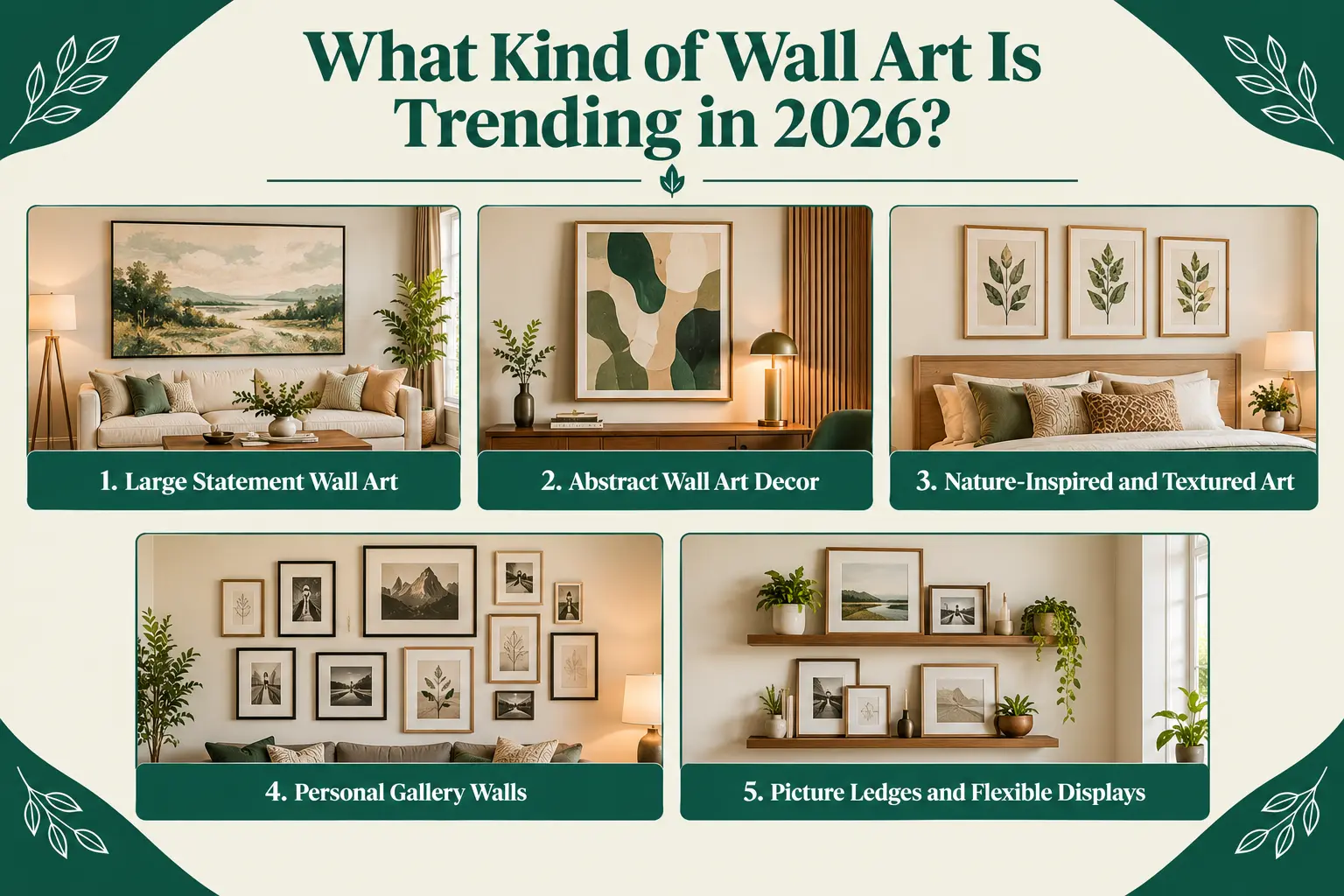
Wall art trends continue to include personal expression, natural textures, statement pieces, and flexible arrangements. However, trends are best used as inspiration rather than strict rules. Choose artwork that suits your home and that you will enjoy looking at over time.
Add depth and reflect natural light with these wall mirror decor ideas for a brighter, more balanced interior.
1. Large Statement Wall Art
Large wall art creates a focal point without requiring several smaller decorations. A wide canvas painting, oversized abstract print, or large nature-inspired artwork can work well above a sofa, bed, or dining table.
Choose a piece that fits the wall and nearby furniture. Artwork that is too small may look lost, while an oversized piece can make a compact room feel crowded.
2. Abstract Wall Art Decor
Abstract art uses shapes, lines, colors, and textures rather than always showing recognizable subjects. It can suit modern, minimalist, contemporary, and eclectic interiors.
For a calm room, consider soft colors and simple shapes. For a more dramatic look, choose strong contrast, expressive brushstrokes, or geometric patterns.
3. Nature-Inspired and Textured Art
Botanical prints, landscape paintings, natural forms, and textured artwork can bring a softer feeling to a room. Artwork made with visible brushstrokes, fabric, layered paper, or raised materials adds interest beyond color alone.
These designs can work especially well in bedrooms, reading corners, and living rooms with natural wood, linen, or other textured materials.
4. Personal Gallery Walls
A gallery wall combines several pieces into one display. You can arrange family photographs, art prints, illustrations, or small paintings together.
A coordinated gallery wall does not need every frame to match. Similar colors, related subjects, or consistent spacing can help different pieces feel connected.
5. Picture Ledges and Flexible Displays
Picture ledges allow you to display framed prints without creating a permanent arrangement of nail holes for every piece. You can layer frames, add a small decorative object, or change the display when your room needs a refresh.
Make sure the ledge is securely installed and that frames cannot easily slide off, particularly in homes with children or pets.
Wall Art Decor Ideas for Every Room
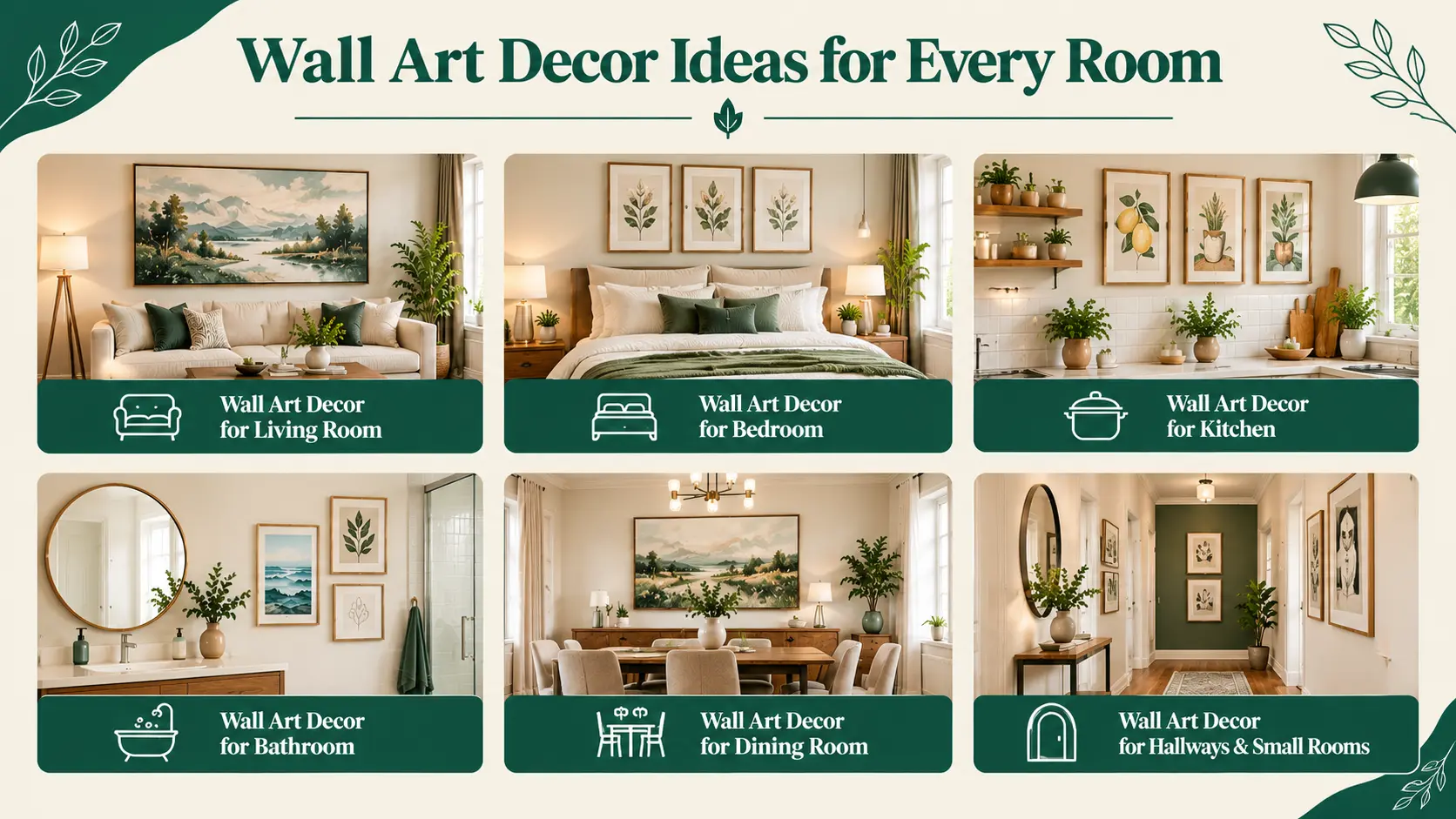
Each room serves a different purpose, so its artwork should suit the way you use the space.
Wall Art Decor for Living Room
The living room is often the best place for a statement artwork because it is where family members gather and guests spend time.
Here are some ideas to try:
- Large canvas artwork: Hang a wide painting above the sofa to create a clear focal point.
- Modern abstract prints: Choose artwork with colors that connect to your cushions, rug, or curtains.
- Metal wall art: Use a sculptural metal design when you want texture and dimension.
- Framed picture arrangements: Combine several prints in a balanced gallery wall.
- Wood wall art: Add warmth with carved, slatted, or natural wood designs.
For a simple arrangement, center the artwork above the main furniture rather than automatically centering it on the entire wall. This helps the display feel connected to the room.
Wall Art Decor for Bedroom
Bedroom wall art should support a comfortable and restful atmosphere. Soft colors, nature prints, simple illustrations, and personal photographs are useful choices.
Consider these ideas:
- Hang one wide artwork above the headboard.
- Place two matching framed prints side by side.
- Use muted green, beige, gray, pink, or blue artwork for a softer look.
- Add a small personal gallery wall beside a dressing area.
- Choose simple abstract designs for a clean, modern bedroom.
Avoid hanging heavy artwork where it could fall onto the bed. Use suitable wall anchors and mounting hardware for the wall type and the weight of the piece.
Wall Art Decor for Kitchen
Kitchen walls can benefit from artwork that feels lively without getting in the way of cooking or cleaning.
Food illustrations, fruit prints, herb artwork, coffee-themed illustrations, and simple typography can all work well. Small framed prints may fit narrow wall sections, while a larger piece can fill an empty dining nook.
Choose materials that are easy to clean and keep artwork away from direct heat, splashes, steam, and grease wherever possible.
Wall Art Decor for Bathroom
Bathroom artwork can add color and personality to a small space. Ocean scenes, botanical prints, abstract designs, and simple line drawings are common choices.
Because bathrooms can be humid, choose materials and frames that tolerate moisture. Avoid placing valuable artwork in areas exposed to water, condensation, or direct steam. Good ventilation can help protect both the artwork and the surrounding wall.
Wall Art Decor for Dining Room
Artwork can help create a welcoming setting for family meals and gatherings.
A large painting, a pair of framed prints, or a balanced group of smaller pieces can work above a sideboard or dining table. Choose artwork that complements the table, chairs, lighting, and room colors.
For a more relaxed setting, try nature-inspired art. For a more formal look, consider symmetrical frames or a single statement painting.
Visit Home Floret for more home decor inspiration, wall styling tips, and creative ideas for indoor and outdoor spaces.
Wall Art Decor for Hallways and Small Rooms
Hallways and compact rooms often have limited wall space, so the artwork should feel intentional rather than crowded.
Try a vertical print, a narrow gallery arrangement, a small round mirror, or a sequence of matching frames. A mirror can reflect light and create a greater sense of depth, although its effect depends on what it reflects and how the room is lit.
Keep pathways clear and avoid placing frames where people might bump into them.
Popular Types of Wall Art Decor
Different materials and formats create different visual effects. Understanding the options can help you choose artwork that suits your room.
Canvas Wall Art Decor
Canvas art is usually printed or painted on canvas fabric stretched over a frame. It can have a soft, textured appearance and works well in living rooms, bedrooms, and other areas where you want a substantial artwork.
Canvas is available in abstract, landscape, floral, portrait, and minimalist styles. Check the dimensions and whether the edges are finished before choosing a piece.
Framed Wall Art and Art Prints
Framed wall art can include photographs, illustrations, paintings, and printed designs. The frame helps define the artwork and may provide additional protection.
A simple frame can suit modern interiors, while a decorative frame may complement a traditional room. A suitable mat, which is the border between the artwork and frame, can create extra visual space around a print.
Metal Wall Art Decor
Metal wall art often features cut-out shapes, geometric patterns, nature-inspired designs, or sculptural forms. It can add depth and create interesting shadows when positioned near suitable lighting.
Consider the metal finish, weight, sharp edges, and mounting requirements before installing it. Large metal pieces may need more secure fixings than lightweight framed prints.
Wood Wall Art Decor
Wooden wall decorations bring natural texture and warmth. Options include carved designs, geometric arrangements, wooden lettering, and decorative panels.
Lighter wood can complement airy interiors, while darker finishes can create contrast against pale walls. Consider the room’s existing wood tones so the display feels coordinated rather than accidental.
3D Wall Art Decor
Three-dimensional wall art projects outward from the wall instead of appearing completely flat. It may include layered shapes, sculptural pieces, raised patterns, or decorative panels.
This style works well when a room needs texture or a strong focal point. Before installing it, consider how far the piece extends into the room and whether it will obstruct a walkway.
Wall Decals and Decorative Stickers
Wall decals offer a flexible way to decorate without hanging traditional framed artwork. They may feature flowers, geometric shapes, nature scenes, or simple illustrations.
They can be useful in rented spaces or children’s rooms, but always check whether the adhesive is suitable for your wall finish. Test a small area first because removal may damage some paint or wallpaper.
Mirrors as Wall Art
Decorative mirrors combine visual interest with a practical purpose. Round mirrors, framed mirrors, and groups of smaller mirrors can add shape and reflect available light.
Position a mirror where it reflects something pleasant, such as a window, plant, or attractive part of the room. Avoid assuming that every mirror will make a room brighter, as the result depends on its position and the available light.
Choosing Wall Art by Color and Style
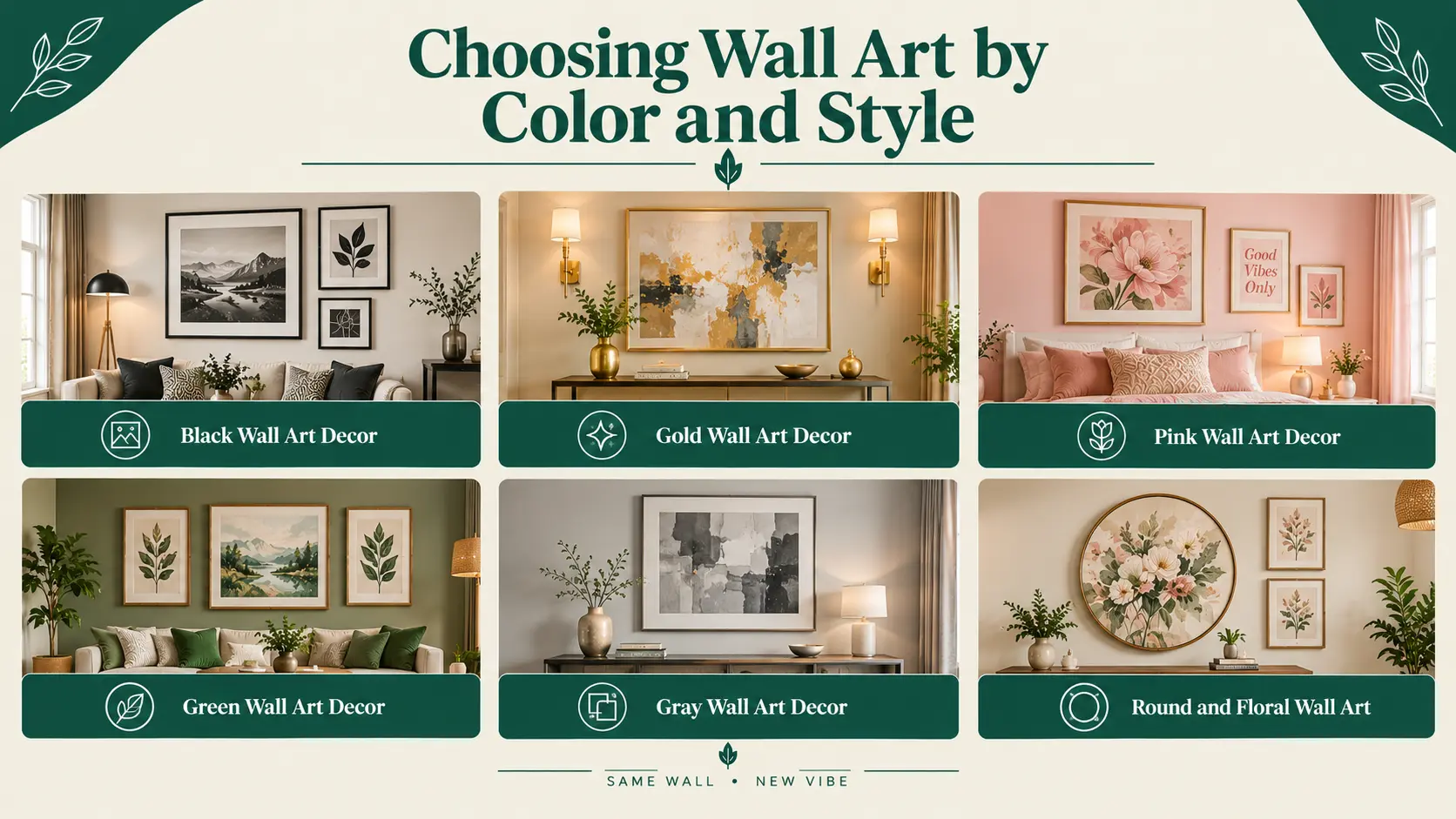
Color can help connect wall art with the rest of your interior. You can match existing colors, create contrast, or introduce a new accent shade.
Black Wall Art Decor
Black artwork can add contrast and definition to a light-colored room. Black-and-white photography, line drawings, and geometric prints often suit minimalist and contemporary spaces.
For a bold, contemporary look, explore these metal wall decor ideas to add texture and dimension to your walls.
Gold Wall Art Decor
Gold-toned frames and decorative pieces can introduce warmth and a polished look. Use gold as an accent if the room already has several strong colors or reflective surfaces.
Pink Wall Art Decor
Pink artwork can feel soft, playful, or bold depending on its shade and design. Pale pinks may suit bedrooms and calm living spaces, while stronger pinks can create a striking accent.
Green Wall Art Decor
Green artwork connects naturally with botanical themes, landscapes, and plant-inspired interiors. It can work with wood furniture, neutral walls, and other natural textures.
Gray Wall Art Decor
Gray art can help create a calm, understated appearance. Pair it with white, beige, black, or muted colors to maintain a balanced palette.
Round and Floral Wall Art
Round wall art introduces curved shapes that can soften a room filled with straight lines. Floral artwork adds color and natural forms, from detailed botanical illustrations to large, expressive paintings.
Rather than matching every decorative item, choose one or two colors from your artwork and repeat them elsewhere in the room.
How to Choose the Right Wall Art Size
Size is one of the most important factors when decorating a wall. Even beautiful artwork may look out of place if it is too small or too large for the surrounding furniture.
Measure the Wall and Furniture
Measure the available wall space before buying or creating artwork. If the piece will hang above a sofa, bed, or console, measure the furniture too.
As a starting point, a single artwork or grouped arrangement above furniture often looks balanced when it spans roughly two-thirds to three-quarters of the furniture’s width. This is a flexible design guideline, not a strict rule.
For example, if your sofa is 90 inches wide, an artwork arrangement around 60 to 68 inches wide may be a useful starting point. Adjust the size according to the wall height, ceiling, furniture shape, and overall layout.
Hang Artwork at a Comfortable Height
For artwork displayed on its own, placing its center around 57 to 60 inches from the floor can be a helpful starting point. Adjust this based on the room, the people using it, and whether the artwork is above furniture.
When hanging art above a sofa or bed, leave enough space between the furniture and the frame so the two elements feel connected without touching.
Plan a Gallery Wall Before Hanging
Lay the frames on the floor first or create paper templates to test the arrangement. Start with the largest piece, then position smaller pieces around it.
Keep spacing reasonably consistent if you want a neat appearance. For a more relaxed display, vary the frame sizes while keeping a shared color palette or theme.
Unique and Budget-Friendly Wall Art Decor Ideas
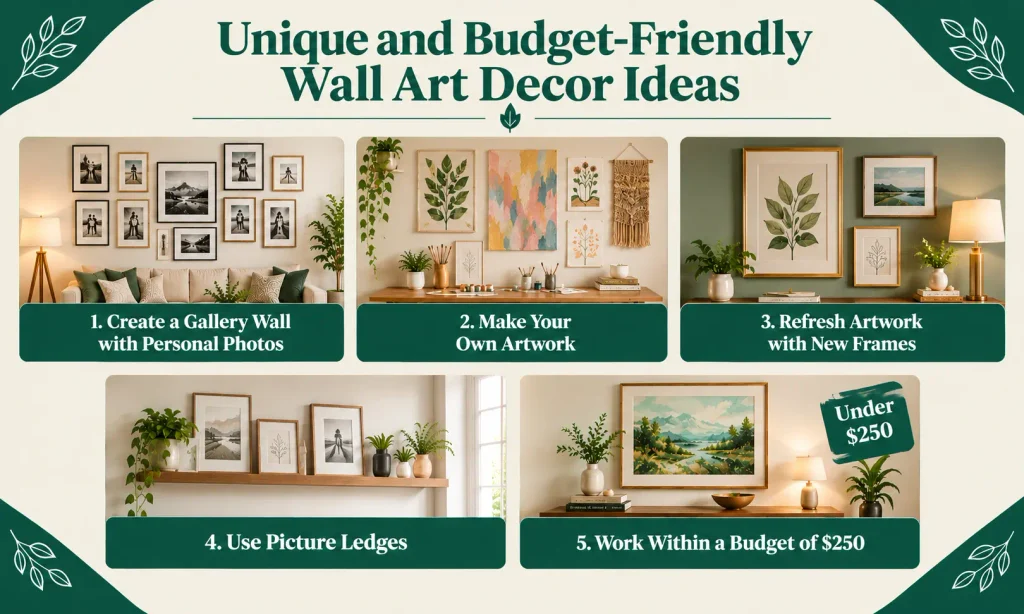
You do not need a large budget to create an attractive wall display. Thoughtful placement and a few meaningful pieces can have more impact than filling every wall.
Create a Gallery Wall with Personal Photos
Choose photographs from family events, travel, nature, or everyday moments. Use similar frames for a coordinated display or mix different frame styles for a more casual look.
Make Your Own Artwork
Try simple abstract painting, paper collage, fabric art, or a series of small drawings. Handmade artwork can make a room feel personal, and you can choose colors that fit your existing decor.
Refresh Artwork with New Frames
If you already own prints or photographs, changing the frame can give them a different appearance. Check that the new frame fits the artwork’s dimensions and that the materials are suitable for the item.
Use Picture Ledges
A picture ledge lets you change artwork without redesigning the entire wall. Combine a few frames of different sizes, but avoid overcrowding the shelf or placing unstable objects near its edge.
Work Within a Budget of $250
If your wall art budget is under $250, compare the full cost rather than the artwork price alone. Frame costs, shipping, hanging hardware, and installation may affect the total.
You could use the budget for one medium-sized statement piece, several smaller prints, or a carefully planned gallery wall. The best choice depends on your room dimensions and the quality of the materials.
How to Compare Wall Art Options
| Type | Best suited for | Things to consider |
| Canvas art | Living rooms and bedrooms | Size, surface texture, and edge finish |
| Framed prints | Hallways and gallery walls | Frame material, matting, and print quality |
| Metal art | Modern and contemporary spaces | Weight, finish, and mounting |
| Wood art | Warm, natural interiors | Wood tone, texture, and maintenance |
| 3D wall art | Feature walls | Depth, projection, and secure fixing |
| Wall decals | Flexible or temporary displays | Adhesive compatibility and removal |
| Mirrors | Spaces that benefit from reflected light | Placement, weight, and safe installation |
There is no single best wall art type for every home. Choose according to the room, your budget, the wall surface, and the look you want to create.
If you prefer natural textures and a warm finish, these wood wall decor ideas can help create a welcoming and stylish space.
What to Check Before Choosing Wall Art
Before purchasing or installing artwork, consider the following points:
- Dimensions: Check the full width, height, and depth.
- Materials: Understand whether the artwork is printed, painted, framed, or made from another material.
- Frame details: Confirm whether a frame is included and whether the artwork needs additional protection.
- Installation: Check the mounting method and whether it suits your wall type.
- Maintenance: Consider dust, humidity, direct sunlight, and cleaning requirements.
- Color and style: Make sure the artwork works with the room without needing every item to match.
- Total cost: Include framing, delivery, hardware, and installation where applicable.
- Condition and quality: Inspect the finish, edges, frame corners, and print clarity when possible.
If you are comparing several options, use these points to assess them fairly rather than choosing based on appearance alone.
How to Care for Wall Art Decor
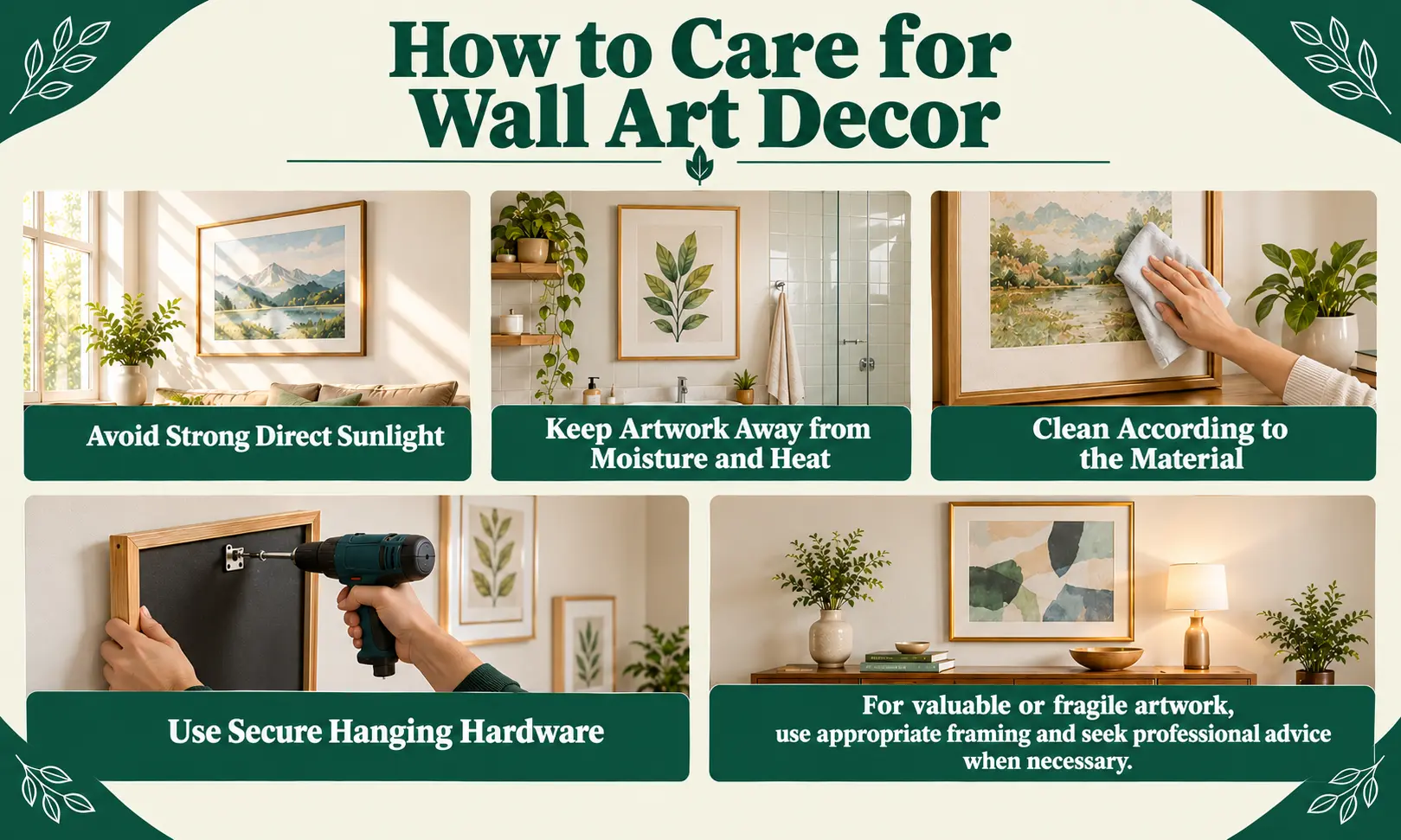
Proper placement and simple care can help artwork stay in good condition for longer.
Avoid Strong Direct Sunlight
Direct sunlight can fade colors and damage paper over time. Place valuable prints away from strong sunlight and consider suitable glazing or protective materials where appropriate.
Keep Artwork Away from Moisture and Heat
High humidity can affect paper, frames, and other materials. Avoid hanging delicate artwork near showers, sinks, cooking areas, radiators, or vents where moisture or heat may cause damage.
Clean According to the Material
Dust frames and decorative surfaces gently with a suitable soft cloth. Do not apply cleaning liquids directly to prints, paintings, or delicate finishes unless the material’s care instructions allow it.
Use Secure Hanging Hardware
Choose fixings suitable for the artwork’s weight and the type of wall. Heavy mirrors, metal art, and large frames may need stronger mounting methods than lightweight prints.
For valuable or fragile artwork, use appropriate framing and seek professional advice when necessary.
Frequently Asked Questions About Wall Art Decor
What are some good ideas for wall art?
Good wall art ideas include large canvas paintings, framed prints, abstract designs, nature-inspired artwork, metal decorations, wooden pieces, personal photographs, and gallery walls. The right option depends on your room size, style, and budget.
What are the trending wall art styles for 2026?
Current design directions include large statement artwork, expressive abstract pieces, nature-inspired designs, textured materials, personal gallery walls, and flexible picture-led displays. Trends vary, so choose styles that work with your home rather than following every new look.
Which type of wall art is best for a living room?
Large canvas art, framed prints, abstract paintings, metal wall sculptures, and coordinated gallery walls can all work well in a living room. Consider the sofa width, wall height, lighting, and existing color scheme before choosing.
Is canvas art better than framed wall art?
Neither is always better. Canvas art can provide a textured appearance and may not need a separate frame. Framed art can offer more design choices and may provide added protection for prints. The best choice depends on the artwork, materials, room, and budget.
How do I decorate a large empty wall?
You can use one oversized artwork, a gallery wall, a series of coordinated prints, a large mirror, or a 3D decorative feature. Measure the wall first and test the layout before installing anything.
How can I decorate a small room with wall art?
Choose a few well-sized pieces rather than covering every wall. Vertical artwork can draw the eye upward, while a carefully placed mirror may reflect light and create a greater sense of space. Keep the arrangement simple so the room does not feel crowded.
How can I decorate walls on a small budget?
Try personal photographs, handmade artwork, affordable prints, secondhand frames, or a small picture ledge. Reusing existing frames and planning the arrangement before buying new items can help reduce costs.
What size artwork should go above a sofa?
A useful starting point is artwork or a grouped arrangement around two-thirds to three-quarters of the sofa’s width. For a 90-inch sofa, an arrangement around 60 to 68 inches wide may work well. Adjust the proportions to suit the wall and the overall room layout.
Is wall art suitable for every room?
Wall art can work in almost any room, but the materials and placement matter. Kitchens and bathrooms may expose artwork to heat, grease, or moisture, so choose suitable materials and keep delicate pieces away from those conditions.
Final Thoughts
Wall art decor is a practical way to add personality, color, texture, and balance to your home. Whether you prefer canvas paintings, framed prints, metal designs, wooden decorations, mirrors, or handmade pieces, the best results come from choosing artwork that suits the room.
Start by measuring your wall, considering your furniture, and deciding what you want the artwork to achieve. You can create a bold focal point with one large piece or build a more personal display with several smaller items.
You do not need to decorate every empty wall. A few well-chosen pieces, placed thoughtfully and cared for properly, can make your home feel more complete and inviting.
Pingback: 15 Wood Wall Decor Ideas and Wooden Wall Art for Every Room
Pingback: 25 Bathroom Wall Decor Ideas for a Modern Look 2026
Pingback: Dining Room Wall Decor | 25 Gorgeous Ideas 2026