
Living room wall decor can change how a room looks and feels. The right artwork, decorative mirror, wooden panel, or floating shelf can bring color, texture, and personality to an empty wall. You do not need to cover every space or spend a lot of money. A few well-placed pieces can make your living room feel complete.
The bestLiving Room Wall Decor Ideas: Modern, Simple and Unique Styles
Living room wall decor can change how a room looks and feels. The right artwork, decorative mirror, wooden panel, or floating shelf can bring color, texture, and personality to an empty wall. You do not need to cover every space or spend a lot of money. A few well-placed pieces can make your living room feel complete.
The best living room wall decor depends on your furniture, wall size, lighting, and personal style. You might prefer modern paintings, simple framed prints, natural wood accents, or a gallery wall filled with photographs. Before choosing anything, consider how the decor will work with your sofa, rug, curtains, and other features. This helps create a balanced room rather than a collection of unrelated objects.
What Is the Best Wall Decor for a Living Room?
The best wall decor for a living room is artwork, mirrors, decorative panels, shelves, or wall hangings that suit the available space and your interior style. Large paintings can create a focal point, mirrors can reflect light, and wooden panels can add texture. The right choice depends on your room size, furniture, budget, and the look you want.
For a small living room, one large framed print or a simple mirror may be enough. A wide living room wall can support a gallery arrangement, oversized artwork, or decorative panels. If your sofa or rug already has a bold pattern, simpler wall decor may create a better balance.
Find more inspiration for decorating every corner of your home with Home Floret, including ideas for creating a warm and welcoming living room.
15 Living Room Wall Decor Ideas for Every Home
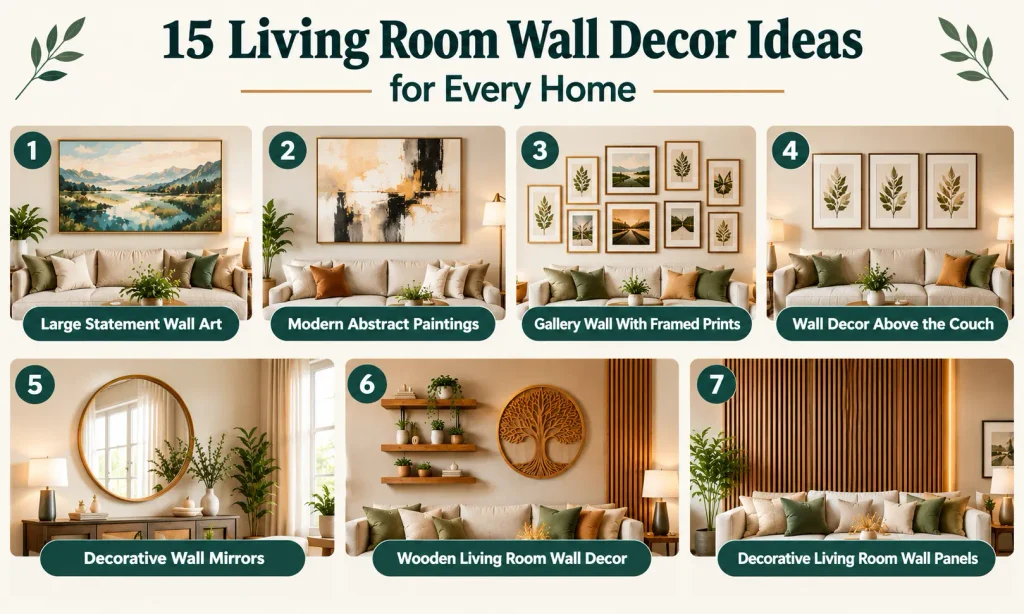
1. Large Statement Wall Art
Large statement artwork works well when a living room wall looks empty or lacks a focal point. A landscape painting, abstract canvas, or oversized print can bring the seating area together without requiring many smaller decorations.
Choose artwork that includes one or two colors already present in your room. For example, a painting with green and warm brown tones can connect a neutral sofa with wooden furniture. Measure the available space before buying art. A piece that is too small may look lost, while an oversized one can overwhelm the furniture.
2. Modern Abstract Paintings
Modern abstract paintings add color, shape, and movement to living room walls. They suit contemporary spaces with simple furniture, clean lines, and uncluttered surfaces.
For a calm look, choose artwork with soft beige, gray, cream, or earthy tones. If your room needs more energy, select a painting with a stronger color that repeats in a cushion or rug. Keep the rest of the wall relatively simple so the artwork remains the main feature.
3. Gallery Wall With Framed Prints
A gallery wall brings several pictures together in one planned arrangement. You can combine photographs, botanical prints, line drawings, and paintings to create a display that reflects your interests.
Start by choosing a common element, such as similar frame colors or a shared color palette. Lay the frames on the floor and try different layouts before hanging them. You can also cut paper templates to match each frame and attach them temporarily to the wall.
For a neat arrangement, leave about 2 to 3 inches between most frames, then adjust the spacing to suit their sizes and the wall. Keep the full group visually balanced instead of placing each picture without a plan.
Complete your living room with these wall hanging decor ideas to add character and make empty walls feel more personal.
4. Wall Decor Above the Couch
The wall above the couch is often the main display area in a living room. A wide painting, two matching prints, or a gallery wall can connect the sofa with the rest of the decor.
As a starting point, choose artwork or a complete group that is about two-thirds to three-quarters of the sofa’s width. For a 90-inch sofa, this gives an approximate width of 60 to 68 inches.
Keep the arrangement centered over the sofa. A gap of around 6 to 8 inches between the sofa back and the bottom of the artwork is a useful starting point, although the right distance depends on the furniture and artwork size. Always check the arrangement from a seated position before making holes in the wall.
5. Decorative Wall Mirrors
Decorative mirrors add shape and reflect light. Round mirrors soften a room with many straight lines, while rectangular mirrors often suit modern and traditional interiors.
Place a mirror where it reflects a pleasant view, a window, or an attractive feature. Avoid positions that reflect clutter or create uncomfortable glare. A large mirror can act as the main decoration above a console or sofa, so you may not need several smaller objects around it.
Choose secure mounting hardware suitable for the mirror’s weight and your wall type.
6. Wooden Living Room Wall Decor
Wooden living room wall decor brings natural texture and warmth. Options include carved wood artwork, decorative slats, framed wooden pieces, and wall-mounted shelves.
Light wood often works well with white walls and neutral furniture. Darker wood can create contrast against cream or pale gray walls. You do not need every wooden item in the room to have the same finish. Instead, choose tones that look comfortable together.
If you use reclaimed wood, check that it is clean, properly prepared, and suitable for indoor use before hanging it.
Add a modern touch to your living room with these metal wall decor ideas that bring texture and visual interest to empty walls.
7. Decorative Living Room Wall Panels
Wall panels add structure and texture to plain walls. Popular options include fluted panels, wood slats, raised geometric designs, and smooth decorative boards.
A feature wall behind the sofa can create a strong visual center without adding many separate objects. Light finishes may suit a bright, simple room, while darker panels can make a seating area feel more defined.
Before choosing panels, compare their material, thickness, finish, cleaning needs, and installation method. Check whether the wall can support the planned installation and follow the manufacturer’s instructions.
8. Floating Shelves and Display Ledges
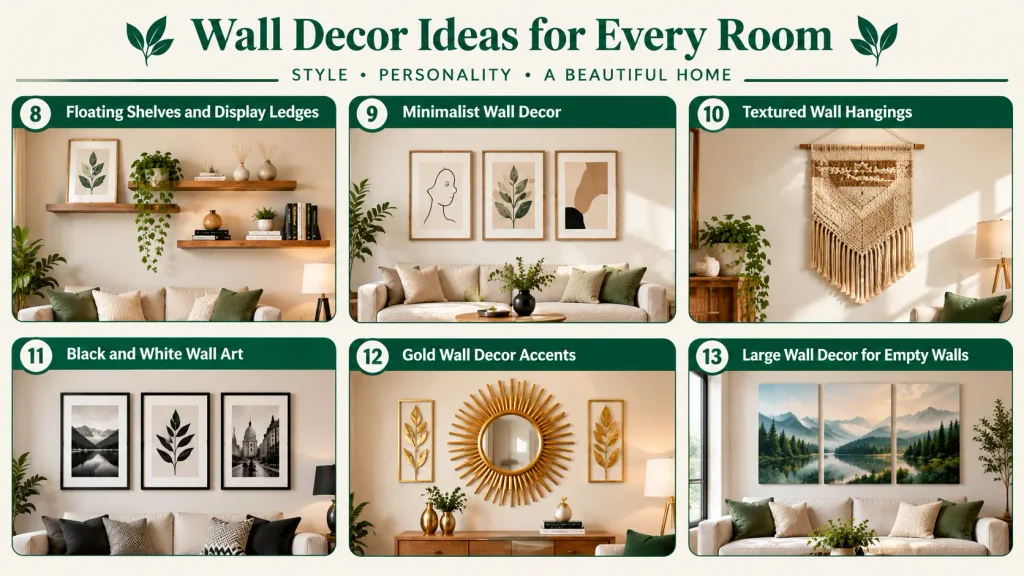
Floating shelves give you space to display framed prints, small plants, books, and decorative objects. They are useful when you want a wall arrangement that can change over time.
Try combining objects of different heights while keeping a few open spaces. For example, place a framed print at one end, a small plant near the center, and a short stack of books at the other end. Avoid filling every inch of the shelf.
Check the shelf’s weight limit and use fixings suited to the wall. Do not assume that a small bracket can safely support heavy books or pottery.
9. Minimalist Wall Decor
Minimalist living room wall decor uses a few carefully selected pieces. One line drawing, a simple framed print, or a small group of neutral artworks can add character without making the room feel busy.
This style works well when your furniture has clean shapes and the room already includes different textures. Focus on the size and placement of each piece rather than adding more decorations. Empty wall space can be part of the design.
10. Textured Wall Hangings
Textile wall hangings add softness to rooms with hard surfaces such as glass, metal, and tile. Woven designs, fabric art, and handmade hangings can create a relaxed atmosphere.
Choose a piece that suits the wall size and the room’s colors. Natural shades can work well with wood and linen, while a stronger pattern can add interest to a plain room. Check the care instructions, especially if the hanging will receive direct sunlight or collect dust easily.
11. Black and White Wall Art
Black and white wall art creates contrast without adding more colors to your room. Photography, line drawings, graphic prints, and monochrome paintings can suit both modern and traditional interiors.
Black frames create a clear outline, while natural wood frames give the arrangement a softer look. Two or three related prints can work above a sofa, while one larger piece may be better for a narrow wall.
12. Gold Wall Decor Accents
Gold wall decor adds warmth and a reflective finish. Gold-toned mirrors, metal leaves, geometric sculptures, and artwork with gold details can stand out against white, beige, navy, or dark green walls.
Use gold as an accent rather than covering the room with shiny objects. A gold mirror paired with a small gold detail in nearby lighting or accessories can create a connected look. Balance metallic finishes with wood, fabric, or matte surfaces.
13. Large Wall Decor for Empty Walls
Large living room walls often need a clear plan rather than many small decorations scattered across the space. You can use oversized artwork, a gallery wall, decorative panels, or shelves arranged with framed prints.
First, identify the area you want to decorate and measure its width and height. Think about nearby furniture, doorways, and windows. A wide wall may suit a horizontal painting, while a taller wall may work better with a vertical arrangement.
Leave enough open space around the display so it feels intentional. A large wall does not need to be covered from edge to edge.
Create a warm and inviting atmosphere with these wood wall decor ideas that pair well with natural furniture and cozy living room styles.
14. Nature-Inspired Wall Decor
Nature-inspired wall decor brings outdoor colors and shapes into the living room. Botanical prints, landscape paintings, leaf designs, and tree artwork can work with many interior styles.
Pair these pieces with wooden furniture, woven baskets, natural fabrics, or indoor plants. Green, beige, and earthy brown tones can help connect the different elements without making everything match exactly.
If you choose artwork for a bright wall, check how sunlight falls on it during the day. Strong direct sunlight can fade some prints and artwork over time.
15. Personal Photographs and Meaningful Art
Personal photographs, travel pictures, handmade art, and meaningful prints can make a living room feel more personal. These pieces also give visitors a sense of your interests and experiences.
Use similar frames or a shared color theme to connect different images. You can mix photographs with paintings, small illustrations, and a few decorative objects. Choose pieces that matter to you rather than filling the wall only to follow a trend.
Modern Living Room Wall Decor Ideas
Modern living room wall decor often combines clean shapes, thoughtful color choices, and a mix of smooth and textured materials.
Modern Abstract Art and Oversized Prints
Choose artwork with shapes and colors that work with your furniture. One large painting can create a focal point, while a two-piece or three-piece arrangement can suit a wider wall. For multiple panels, plan the total width and keep the gaps consistent.
Minimalist and Neutral Wall Decor
Cream, white, beige, and gray create a calm background for simple artwork. Add interest through frame finishes, natural materials, and subtle patterns instead of using too many colors.
Contemporary Wall Panels and Sculptural Accents
Fluted panels, geometric designs, and metal wall sculptures introduce depth to a modern room. Use these details on one main wall if you want a feature without making the whole space feel crowded.
Simple and Elegant Living Room Wall Decor Ideas
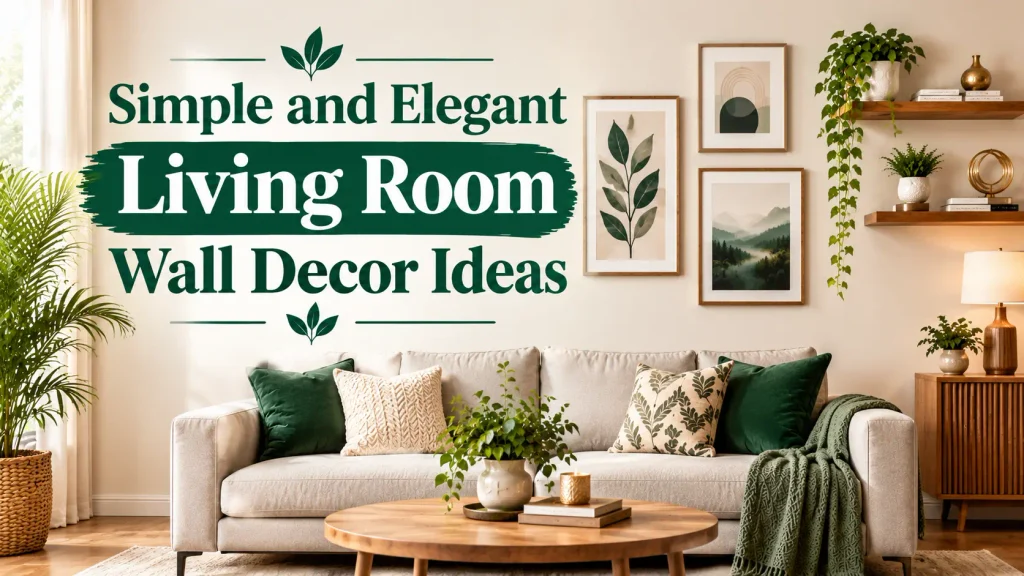
Simple wall decor can look elegant when the size, placement, and colors work together. A single painting, two framed prints, or a decorative mirror may be enough to complete a seating area.
For a neutral living room, consider artwork with warm beige, muted green, or soft brown tones. For a darker sofa, lighter artwork can create contrast. If you are decorating on a budget, reuse frames, rearrange existing pictures, or create a small gallery using photographs you already have.
The aim is not to buy more items. It is to choose pieces that make sense together.
How to Decorate a Large Living Room Wall
Start by deciding what the wall needs. It may need a focal point, more texture, or a stronger connection to the furniture.
Oversized artwork works well when you want a simple display. A gallery wall can fill a wider area with photographs and prints, while wood panels add architectural detail. You can also combine shelves with framed art, provided the arrangement has a clear structure.
For a blank wall, first measure the space that remains visible after accounting for furniture and architectural features. Use paper templates to test the arrangement before hanging anything. If you plan a multi-panel display, measure the full arrangement, including the gaps between pieces, rather than measuring each panel separately.
What Are the Current Living Room Wall Decor Trends?
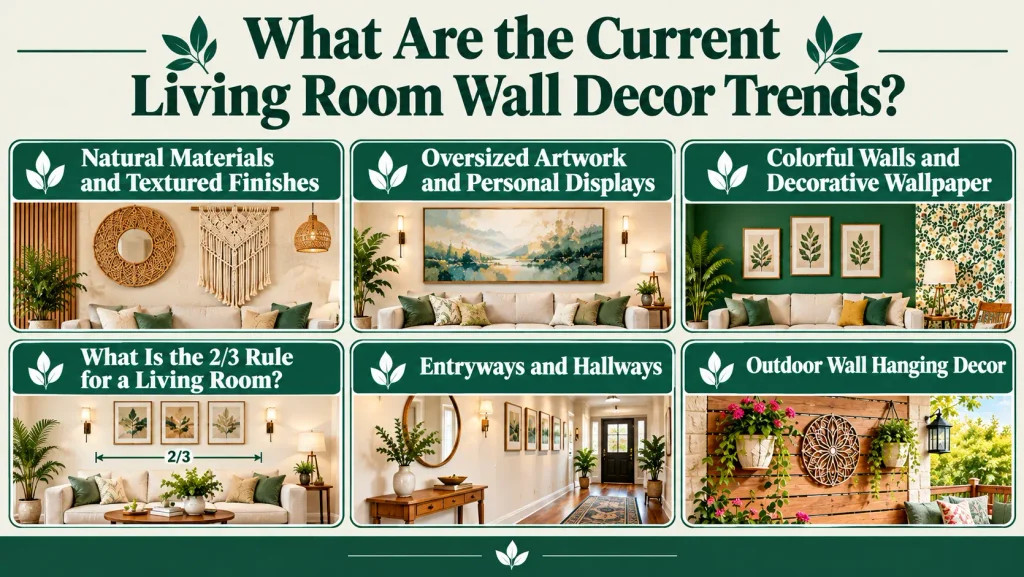
Current design ideas include large artwork, natural materials, textured surfaces, personal collections, and decorative wall finishes. These styles can provide inspiration, but the best choice is one that works with your home and daily needs.
Natural Materials and Textured Finishes
Wood, woven textiles, and raised wall panels add interest without relying on bright colors. They are useful when you want warmth and texture in a simple living room.
Oversized Artwork and Personal Displays
Large paintings and personal photographs give a room a clear focal point. Instead of copying an entire room from a picture, choose details that work with your furniture, lighting, and budget.
Colorful Walls and Decorative Wallpaper
Wallpaper and painted feature walls can change the mood of a room. A bold pattern can create a focal point, while a softer design may work better if you want a quieter setting. Consider the existing furniture and rug before choosing a strong pattern.
Make your living room walls more expressive with these wall art decor ideas featuring paintings, framed prints, and creative wall displays.
What Is the 2/3 Rule for a Living Room?
The two-thirds rule is a decorating guideline that helps you choose artwork that looks balanced above furniture. The artwork, or the complete group of pieces, is often around two-thirds to three-quarters of the width of the sofa below it. This is a starting point, not a strict rule.
For example, if your sofa is 90 inches wide, two-thirds is 60 inches, while three-quarters is 67.5 inches. An arrangement around 60 to 68 inches wide may be a good starting point.
Measure the full display, including the gaps between frames. Then check its height and position in relation to the sofa, wall, and nearby furniture. A very tall artwork or an unusual wall shape may need a different arrangement.
How to Choose the Right Wall Decor for Your Living Room
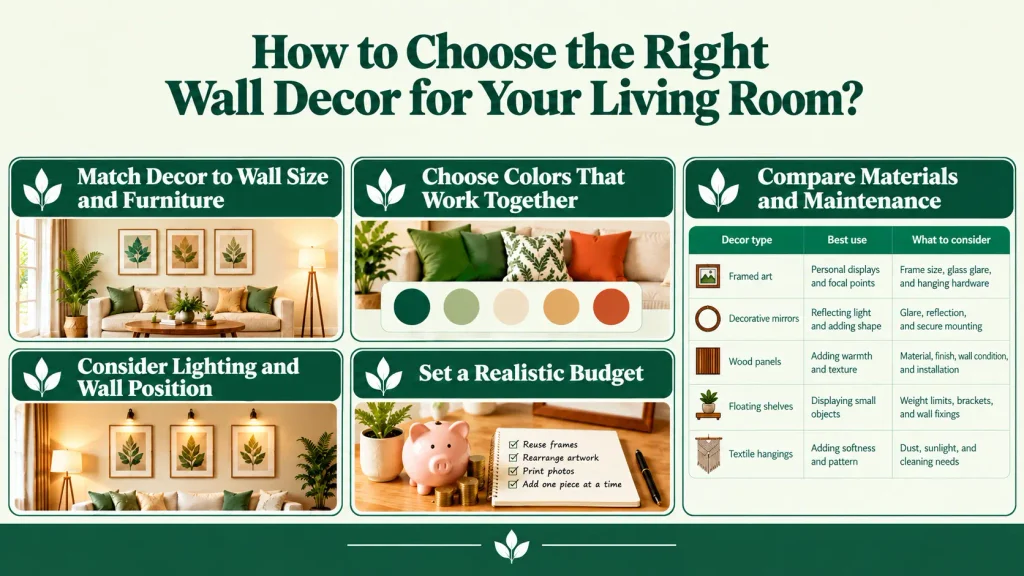
Match Decor to Wall Size and Furniture
Measure the wall and the furniture below it before choosing artwork or panels. Large pieces can suit wide walls, while a smaller arrangement may work better in a compact living room. Consider windows, doors, and other features that limit the available space.
Choose Colors That Work Together
Look at the colors in your sofa, rug, curtains, and cushions. Your wall decor can repeat one of these colors or introduce a contrasting shade. Exact color matching is not necessary, but the overall palette should feel connected.
Compare Materials and Maintenance
Use this guide when deciding which type of decor suits your needs.
| Decor type | Best use | What to consider |
|---|---|---|
| Framed art | Personal displays and focal points | Frame size, glass glare, and hanging hardware |
| Decorative mirrors | Reflecting light and adding shape | Glare, reflection, and secure mounting |
| Wood panels | Adding warmth and texture | Material, finish, wall condition, and installation |
| Floating shelves | Displaying small objects | Weight limits, brackets, and wall fixings |
| Textile hangings | Adding softness and pattern | Dust, sunlight, and cleaning needs |
Consider Lighting and Wall Position
Observe how daylight reaches your wall throughout the day. Direct sunlight may damage some artwork, while bright light reflected in a mirror can cause glare. Use suitable lighting to highlight a feature wall, and avoid placing lights where they make framed pictures difficult to see.
Set a Realistic Budget
You can create attractive living room wall decor without replacing everything. Reuse existing frames, rearrange artwork, print personal photographs, or add one feature piece at a time. Planning the layout first helps you avoid buying items that are too small or do not suit the space.
Add depth and texture to a plain living room wall with these wall panel decor ideas for a stylish feature wall behind your sofa or television.
How to Plan and Hang Living Room Wall Decor
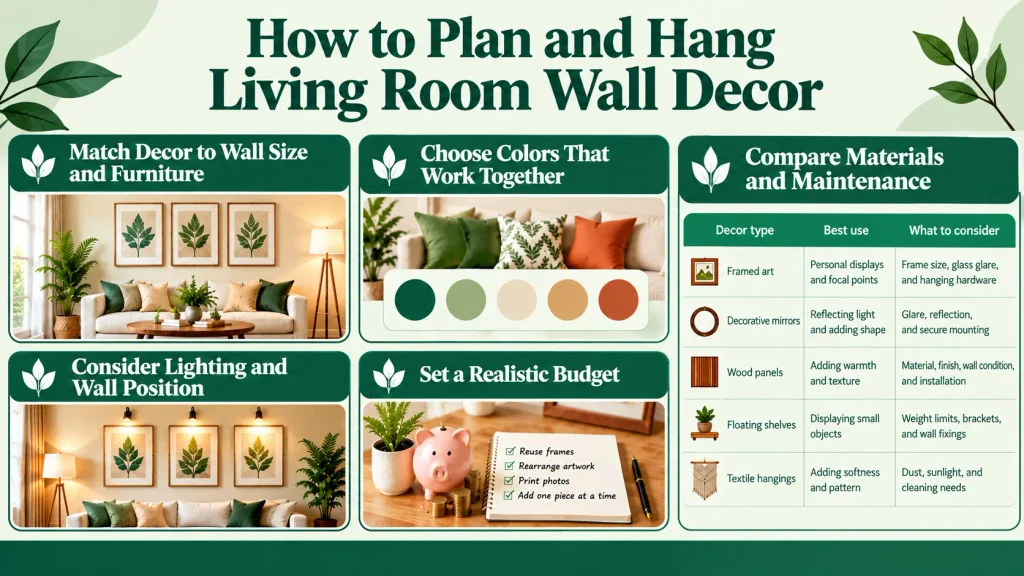
A little preparation can help you avoid extra holes and uneven arrangements.
- Measure the space. Record the width and height of the wall area you want to decorate.
- Choose the layout. Decide whether one large piece, two matching prints, or a gallery wall suits the furniture.
- Test the arrangement. Lay the pieces on the floor or use paper templates on the wall.
- Check the height and spacing. Look at the arrangement while standing and sitting. Make sure it feels connected to the furniture.
- Check the wall and hardware. Use fixings suitable for the wall material and the weight of the item. Follow the product instructions, and seek help if you are unsure about heavy mirrors, shelves, or panels.
- Make final adjustments. Use a level to keep frames aligned and check the display from different parts of the room.
For multi-panel artwork, keep the gaps consistent. For a gallery wall, focus on the balance of the complete group rather than aligning every frame to the same edge.
Common Living Room Wall Decorating Mistakes to Avoid
- Choosing artwork that is too small: Measure the furniture and wall before selecting a piece.
- Hanging art too high: Keep the display visually connected to the sofa or console below it.
- Mixing too many unrelated styles: Repeat a few colors, materials, or frame finishes.
- Filling every empty space: Open wall space can help the main pieces stand out.
- Ignoring lighting: Check for glare and strong direct sunlight before choosing the final position.
- Using unsuitable wall fixings: Check the item’s weight, wall construction, and mounting instructions before installation.
Frequently Asked Questions About Living Room Wall Decor
What can I decorate my living room walls with?
You can decorate living room walls with framed paintings, photographs, mirrors, wooden panels, floating shelves, textile hangings, and wall sculptures. Choose pieces that suit the wall size, furniture, colors, and style of your room.
What are the current wall decor trends?
Popular design directions include oversized artwork, natural materials, textured panels, decorative wallpaper, and personal gallery walls. Choose the styles that suit your home instead of changing your decor only because something is popular.
What is the best wall decor for a living room?
The best wall decor depends on your available space and the look you want. A large painting can create a focal point, a mirror can reflect light, and wooden panels can add texture. Choose pieces that work with your furniture and leave enough open space.
What is the 2/3 rule for a living room?
The two-thirds rule suggests that artwork above a sofa should be around two-thirds of the sofa’s width. For a 90-inch sofa, start with an arrangement around 60 inches wide and adjust it to suit the wall, furniture, and artwork.
What should I put on a large empty living room wall?
Consider oversized artwork, a gallery wall, decorative panels, or floating shelves with a few well-chosen objects. Measure the available space and plan the arrangement around nearby furniture to create a balanced result.
How can I decorate my living room walls on a budget?
Reuse existing frames, display personal photographs, rearrange artwork, or make a simple gallery wall. You can also paint a feature wall or add a small shelf. Focus on a clear layout instead of buying many decorations.
Final Thoughts
Living room wall decor works best when it reflects your style and fits the space you have. Modern paintings, simple framed prints, decorative mirrors, wooden panels, and personal gallery walls all offer useful ways to improve a room.
Start by measuring your wall, choosing a focal point, and selecting colors and materials that work with your furniture. Plan the arrangement before hanging anything, and use suitable fixings for each item. Whether you are decorating above a couch or filling a large empty wall, thoughtful choices can make your living room feel more complete without unnecessary clutter.
Pingback: 25 Bathroom Wall Decor Ideas for a Modern Look 2026