
Wall panel decor is a simple way to add character, texture, and style to plain walls. From warm wooden finishes to modern 3D designs, the right wall treatment can change the look of a room without replacing all your furniture. Wall panels can also frame a television, create a backdrop behind a bed, highlight an entryway, or help define different areas in an open-plan home.
The best wall panel design depends on your room size, budget, existing furniture, lighting, and the material you choose. Some panels create a classic look, while others suit modern and minimalist interiors. However, appearance is only one part of the decision. You should also consider installation requirements, cleaning, durability, and whether the wall may be exposed to moisture or heat.
In this guide, you will find 15 wall panel decor ideas, material comparisons, room-by-room suggestions, cost-planning tips, and practical installation advice. These details will help you choose a design that suits your home and avoid common mistakes before starting your project.
What Is Wall Panel Decor?
Wall panel decor is a decorative wall finish made from separate panels, boards, strips, or molded sections. These pieces may cover an entire wall or create a feature area behind a sofa, bed, or television. Depending on the design, panels can be made from solid wood, wood veneer, MDF, PVC, wood-plastic composite, gypsum, or fabric-covered materials.
Decorative wall panels add shape, texture, and visual interest to a flat surface. Some have smooth finishes, while others feature grooves, raised patterns, geometric shapes, or natural wood grain.
Wall paneling can be used across a full wall, along the lower part of a wall, or in a small section to highlight a particular area. The right choice depends on the look you want and the practical needs of the room.
What Is Decorative Wall Paneling Called?
Decorative wall paneling may also be called interior wall cladding, architectural paneling, or feature-wall paneling. The exact name usually depends on the style and how the panels are arranged.
- Wainscoting: Paneling that usually covers the lower part of a wall.
- Board and batten: Wide boards separated by narrow vertical strips.
- Beadboard: Panels with closely spaced vertical grooves.
- Shiplap: Boards fitted with overlapping or recessed joints.
- Raised paneling: Framed sections with raised central areas, often used in traditional interiors.
- Fluted paneling: Panels with repeated grooves or rounded ridges.
- Slatted paneling: Narrow strips arranged with small gaps between them.
- 3D wall panels: Panels with raised shapes that create visible shadows and texture.
These styles can look quite different, so understanding their names makes it easier to compare designs and explain what you want before purchasing materials.
Add depth and texture to your walls with these wall mirror decor ideas to complement decorative wall panels and create a balanced interior.
How Wall Panels Differ From Wallpaper and Wall Art
Wallpaper adds color, texture, or a printed pattern to a surface. Wall art, such as framed prints and canvas pieces, hangs on the wall. Decorative panels create a more structured surface and may add physical depth.
Some panels can also help cover minor visual imperfections, but they should not be used to hide serious cracks, dampness, or other wall problems without fixing the underlying cause.
Certain acoustic panels can reduce sound reflections inside a room. However, ordinary decorative panels should not be treated as a complete soundproofing system.
15 Wall Panel Decor Ideas for a Stylish Home
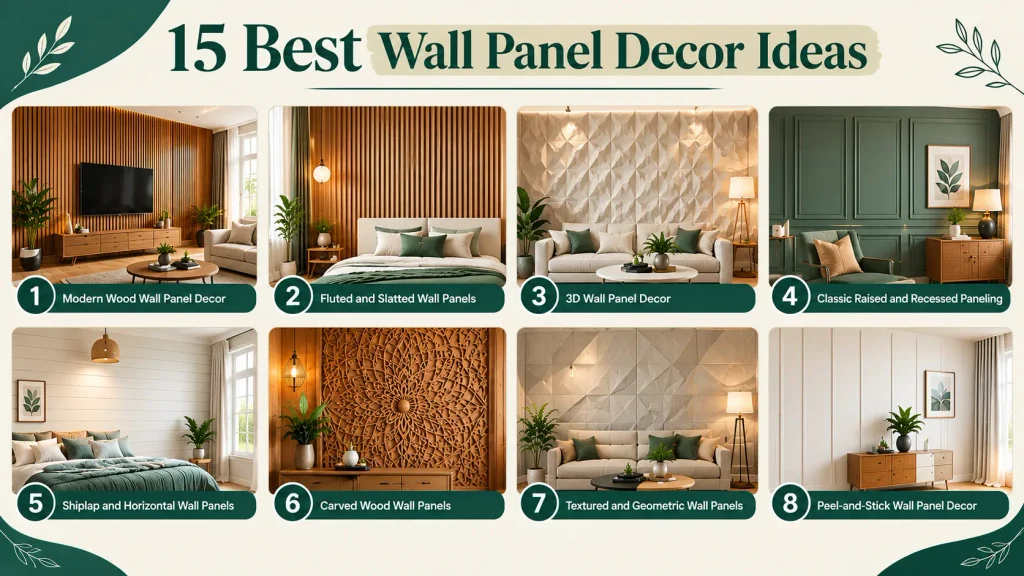
1. Modern Wood Wall Panel Decor
Best for: Living rooms, bedrooms, and TV feature walls that need natural warmth and a timeless look.
Wood wall panel decor brings natural color and texture into a room. Light oak tones can suit bright, relaxed interiors, while walnut and darker wood finishes create a richer appearance.
Use wooden panels behind a sofa, along an entryway wall, or around a television unit. If the room already has wood flooring or wooden furniture, choose a finish that complements those surfaces instead of trying to match every piece exactly.
Solid wood, wood veneer, and wood-look panels can produce similar visual effects, but their cost, maintenance, and performance may differ. Compare these options before making a final decision.
2. Fluted and Slatted Wall Panels
Best for: Modern interiors where vertical lines and subtle texture can make a feature wall stand out.
Fluted panels have repeated grooves, while slatted panels use separate strips with narrow gaps between them. Both create lines that catch light and add texture to a wall.
Vertical fluted wall panel decor can draw the eye upward and emphasize ceiling height. It works well behind a bed, beside a media unit, or on a living room feature wall. Keep nearby furniture and accessories fairly simple so the pattern remains easy on the eyes.
Before installation, check how dust will collect in the grooves and whether you can clean the spaces between the slats. The depth and spacing of the panels can affect both their appearance and maintenance.
3. 3D Wall Panel Decor
Best for: Accent walls, entryways, and media areas that need depth, texture, and visual interest.
Three-dimensional wall panels feature raised geometric shapes, waves, curves, or repeating patterns. They are useful when you want a wall to stand out without relying on bold colors.
A 3D wall panel design can work in a living room, on an entryway wall, or behind a reception-style seating area at home. Consider the lighting before choosing a pattern. Side lighting can create stronger shadows, while soft, even lighting gives the surface a calmer appearance.
For small rooms, consider a restrained pattern on one wall rather than a highly detailed design across several surfaces. Check the panel material, weight, and fixing requirements before installation.
Find more inspiration for decorating your indoor and outdoor spaces at Home Floret.
4. Classic Raised and Recessed Paneling
Best for: Traditional, transitional, and elegant interiors that benefit from balanced shapes and framed wall sections.
Traditional paneling uses framed sections to create order and balance. It can suit formal living rooms, dining areas, bedrooms, and homes with classic architectural details.
Painted white or cream panels provide a clean look. Deeper colors can create stronger contrast with pale furniture. Measure the wall carefully and keep the spacing consistent so the finished design looks planned.
For a balanced result, consider the height of the furniture, the ceiling, and the wall itself. Panels that are too large or too tightly spaced can make the wall feel crowded.
5. Shiplap and Horizontal Wall Panels
Best for: Bedrooms, hallways, and relaxed living spaces that suit a simple, cottage-inspired style.
Shiplap features long horizontal boards with visible joints. It can give a room a relaxed, cottage-inspired look and works well in bedrooms, hallways, and casual living spaces.
Horizontal lines can emphasize a wall’s width, although the effect depends on the room’s proportions and the panel layout. Choose a painted finish for a fresh look or natural wood for more warmth.
Before installing horizontal panels, plan the starting point, spacing, and edges around doors and windows. Consistent alignment helps the finished wall look neat.
6. Carved Wood Wall Panels
Best for: Feature walls where detailed patterns can serve as the main decorative element.
Carved wood panels feature detailed patterns, floral shapes, or geometric designs. They can serve as decorative focal points in a living room, hallway, or bedroom.
Because the surface already contains plenty of detail, pair it with plain walls, simple furniture, and limited accessories. Check how the panels are made and finished, especially if they will be installed in an area that needs frequent cleaning.
Detailed carving can collect dust in small spaces. Consider the amount of maintenance you are willing to do before choosing a design with deep patterns.
7. Textured and Geometric Wall Panels
Best for: Contemporary rooms that need extra visual interest without relying on bold colors.
Textured panels may resemble stone, fabric, plaster, or repeated geometric shapes. They add visual interest without requiring a complex color scheme.
For a balanced room, use a textured panel on one main wall and keep other surfaces simpler. Before choosing a highly detailed pattern, consider how dust will collect in grooves and corners.
Look at samples under the room’s actual lighting. A finish that appears subtle in a showroom may look much stronger when light falls across it at home.
Explore different materials and finishes with these metal wall decor ideas to add texture and visual interest to your walls.
8. Peel-and-Stick Wall Panel Decor
Best for: Small DIY updates, temporary makeovers, and suitable rental spaces where the wall surface allows safe removal.
Peel-and-stick panels can be useful for small updates and some rental spaces. They usually require less installation work than panels fixed with screws or construction adhesive.
However, they are not suitable for every wall. Dust, loose paint, damp surfaces, and uneven plaster can weaken adhesion. Test a small area first and check whether the product can be removed without damaging the finish.
Before purchasing, check the recommended wall surface, room conditions, panel dimensions, and removal instructions. Do not assume that every peel-and-stick panel is reusable or safe for painted rental walls.
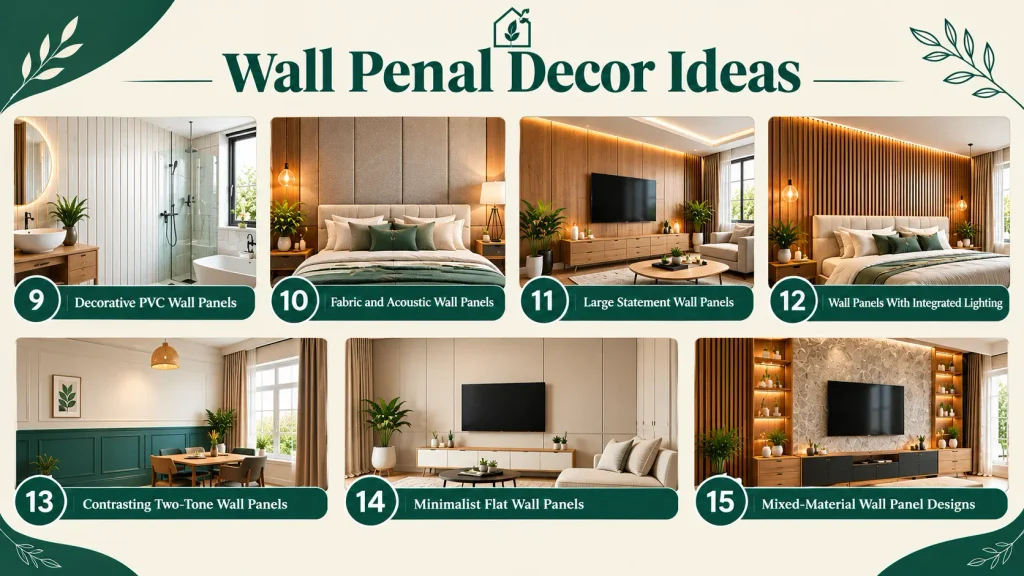
9. Decorative PVC Wall Panels
Best for: Budget-conscious interior updates and suitable moisture-prone areas when the panels are specifically rated for the intended use.
PVC wall panels are lightweight and available in different colors, patterns, and surface finishes. Some products are designed for areas where occasional moisture is expected.
Always check the product’s intended use before installing PVC panels in a kitchen or bathroom. Water resistance does not automatically mean that the complete wall system is waterproof, and panels should not be placed near heat sources unless the manufacturer permits it.
Compare panel thickness, fixing methods, edge finishes, and cleaning requirements. The lowest purchase price may not represent the best overall value if the product is unsuitable for the location.
10. Fabric and Acoustic Wall Panels
Best for: Bedrooms, home offices, and media rooms that need a softer finish and reduced sound reflections.
Fabric-covered panels add a soft appearance and can help reduce sound reflections in suitable rooms. They may work well in bedrooms, home offices, reading corners, and media rooms.
Look for clear information about cleaning, fabric durability, and acoustic performance. These panels may need more care than smooth surfaces because fabric can collect dust and stains.
Acoustic performance depends on the panel construction, thickness, coverage, and room layout. If your main goal is to reduce noise passing between rooms, you will need to consider sound isolation rather than relying on decorative acoustic panels alone.
11. Large Statement Wall Panels
Best for: Spacious feature walls, open-plan living areas, and TV backdrops where fewer visible joints create a cleaner appearance.
Large panels create a continuous look with fewer visible joints. They can work well behind a television, along a dining room wall, or in an open-plan living area.
Before selecting large sheets, check the wall measurements, panel dimensions, access routes, and installation requirements. A design that looks seamless in a photograph may need careful cutting and professional fitting in a real room.
Large panels can be difficult to transport and handle. Include cutting waste and the fixing method in your project plan, and make sure the wall can support the selected panels.
12. Wall Panels With Integrated Lighting
Best for: Modern living rooms and bedrooms where lighting can highlight panel textures and create a comfortable atmosphere.
Wall panels can be combined with LED strips or recessed lighting to highlight grooves, edges, or a television backdrop. Warm lighting often works well with natural wood and neutral colors.
Plan the lighting before installation so wiring, power access, and maintenance remain practical. Use suitable electrical components and get help from a qualified electrician when needed.
Think about glare, light direction, and access to replace or service lighting components. A neat design should remain practical after installation, not just look good in photographs.
13. Contrasting Two-Tone Wall Panels
Best for: Rooms that need a clear visual division, added contrast, or a balanced mix of light and dark colors.
Two-tone wall paneling uses two related or contrasting colors to create a clear design. For example, pale upper walls can sit above darker lower panels, or a wood panel section can contrast with a painted wall.
Repeat one of the colors in a cushion, rug, or furniture detail to connect the room. Test paint samples in daylight and at night because lighting can change how colors appear.
For smaller rooms, consider using a lighter color over a darker lower section or limiting the darker finish to one feature wall. The best balance depends on the amount of natural light and the colors already in the room.
14. Minimalist Flat Wall Panels
Best for: Contemporary and minimalist homes that favor clean lines, smooth finishes, and understated decoration.
Flat panels create a smooth, simple appearance without heavy patterns. They suit modern homes where furniture, lighting, and open space are the main focus.
Choose a subtle finish and carefully aligned joints. This style may look simple, but uneven seams and poor edge finishing can be easy to notice.
Flat panels can be a practical option if you prefer a less detailed surface. Check whether the finish can be cleaned easily and whether the panel edges need trim or additional finishing.
15. Mixed-Material Wall Panel Designs
Best for: Feature walls that combine wood, painted surfaces, stone-look finishes, or other materials for a coordinated, layered appearance.
Combining wood, painted panels, stone-look finishes, or fabric can create a distinctive wall. For example, a television wall may use wood slats in the center with smooth painted sections on either side.
Limit the number of finishes so the wall feels connected rather than crowded. Repeat materials or colors already used in the room to create a consistent look.
Before mixing materials, confirm that their thicknesses, fixing methods, and edges work together. Planning these details early can prevent uneven surfaces and awkward joins.
Wall Panel Decor Ideas for Every Room
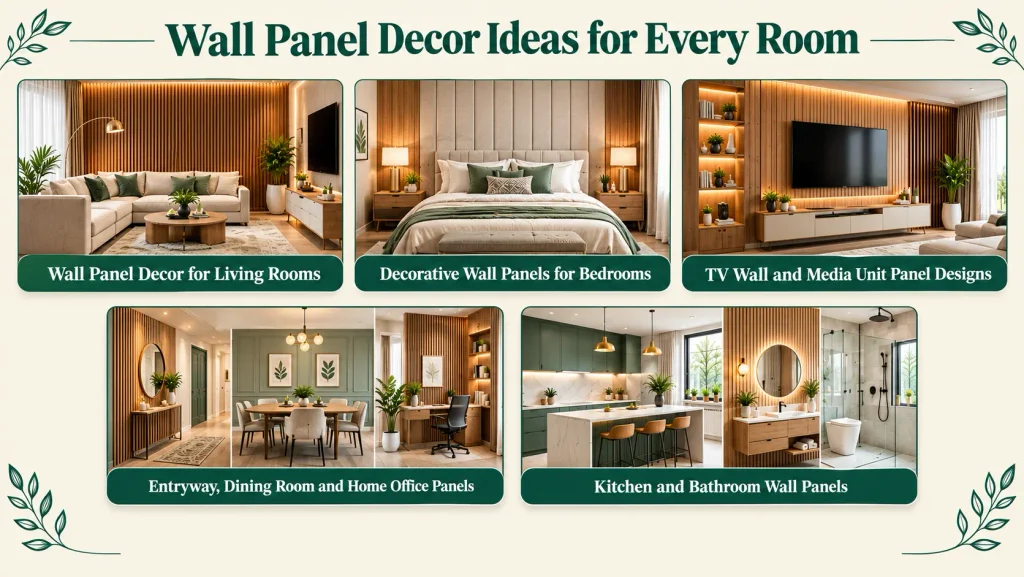
The best wall panel design depends on how a room is used. A panel that looks attractive behind a sofa may not be the best choice for a wall exposed to steam, frequent cleaning, or everyday contact.
Wall Panel Decor for Living Rooms
The living room is a common place for a feature wall. Wood slats, fluted panels, painted molding, and textured 3D designs can all work well.
For a television wall, plan the screen position, cable access, ventilation needs, and storage before fixing the panels. If the room is small, a restrained design may work better than covering every wall.
Consider the seating arrangement before choosing the panel width. The feature wall should work with the sofa, television, lighting, and other furniture instead of competing with them.
Decorative Wall Panels for Bedrooms
Bedroom wall panels often work best behind the headboard. Upholstered panels can create a soft backdrop, while wood panels add warmth and painted molding creates a classic look.
Measure the bed and bedside tables before choosing the panel width. The design should frame the bed without making switches, sockets, or bedside lighting difficult to reach.
Choose finishes that suit the mood you want in the room. Soft colors and simple patterns can create a calm appearance, while a darker feature wall can add contrast when balanced with suitable lighting.
TV Wall and Media Unit Panel Designs
A media wall can combine decorative panels with shelves, cabinets, and lighting. Choose a finish that does not compete with the screen, especially in a small room.
Keep access to cables and electrical points in mind. A neat design should remain easy to maintain after installation.
Before covering the wall, plan access to connections and any equipment that may need servicing. Make sure the installation does not block required ventilation or access points.
Entryway, Dining Room, and Home Office Panels
In an entryway, narrow vertical panels can create a welcoming first impression. Dining rooms may suit framed molding or wood finishes that connect with the table and chairs.
For a home office, simple wood or fabric panels can provide a calm background. Acoustic panels may help manage echoes, but their results depend on the material, coverage, and room layout.
In narrow hallways, avoid choosing a pattern that makes the space feel crowded. A simpler layout and a suitable finish can provide visual interest without overwhelming the area.
Kitchen and Bathroom Wall Panels
Moisture, cleaning, and heat matter more in these spaces. Select products specifically rated for the intended location and follow the full installation instructions.
Do not assume that decorative panels can replace required waterproofing around showers or other wet areas. The complete wall system must be suitable for the exposure.
For kitchen walls, also consider grease, splashes, nearby appliances, and the manufacturer’s heat limits. Check all these factors before selecting a material.
Decorative Wall Panel Materials: Which Should You Choose?
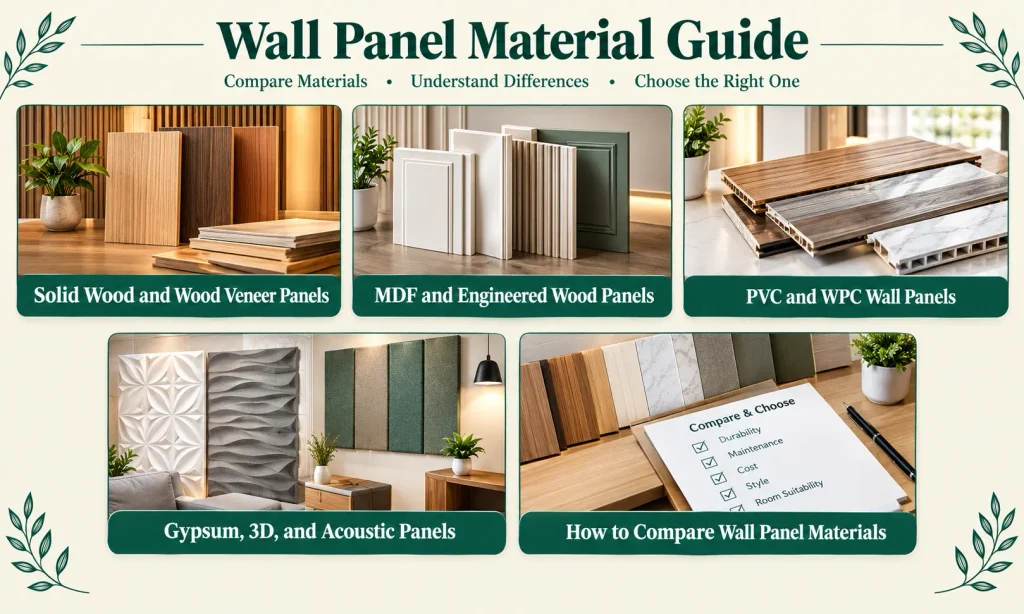
The material affects the look, cost, maintenance, and expected service life of wall panels. No single material is best for every room, so compare product specifications before making a choice.
Solid Wood and Wood Veneer Panels
Solid wood offers natural grain and can often be repaired or refinished, depending on its finish and construction. Wood veneer provides a real-wood surface over a supporting material and may use less solid timber.
Both can be affected by changes in humidity. Allow for suitable installation gaps and follow the manufacturer’s guidance.
Choose these materials when natural grain and warmth are important to your design. Ask how the surface should be cleaned and whether it needs periodic refinishing.
Combine natural textures and decorative panels with these wood wall decor ideas to create a warm and inviting interior.
MDF and Engineered Wood Panels
MDF has a smooth surface that works well with paint and routed designs. It is commonly used for decorative molding and fluted panels.
Standard MDF can swell if exposed to moisture. Moisture-resistant grades may be available, but they are not automatically waterproof.
MDF can suit dry interior spaces where a painted or detailed finish is desired. Check the grade, edge treatment, and installation instructions before using it in a room where moisture may be present.
PVC and WPC Wall Panels
PVC panels are made from plastic, while WPC combines wood-based material with polymers. Both can be available in wood-look and other decorative finishes.
Their performance varies by product. Check the installation method, temperature limits, cleaning guidance, and suitability for the room.
These materials may be useful where a lightweight or easy-to-clean finish is important, but suitability depends on the exact product. Confirm whether the panel is approved for the intended location rather than assuming all PVC or WPC panels have the same properties.
Gypsum, 3D, and Acoustic Panels
Gypsum-based panels can create sculptural patterns but may need careful handling and suitable support. Fabric-wrapped acoustic panels serve a different purpose by helping absorb sound reflections.
Choose each panel for its intended use rather than appearance alone. Check weight, fixing requirements, surface care, and the performance information supplied for the product.
How to Compare Wall Panel Materials
| Material | Common advantage | Main concern | What to check |
| Solid wood | Natural grain and repair options | Humidity and upkeep | Finish, installation gaps, and care |
| Wood veneer | Real-wood appearance | Surface damage and substrate | Core material and edge protection |
| MDF | Smooth, paintable finish | Moisture exposure | Grade and surface coating |
| PVC | Lightweight and easy to wipe | Heat and product quality | Approved use and temperature limits |
| WPC | Wood-like decorative finish | Product-specific performance | Installation method and room suitability |
| Gypsum | Detailed shapes and textures | Weight and fragility | Support and fixing requirements |
| Fabric acoustic panels | Soft appearance and sound absorption | Dust and stains | Cleaning and acoustic information |
Use this table as a starting point. The performance of individual products can vary, so check the specifications before making your final decision.
How Much Does Wall Panel Decor Cost?
The cost of wall panel decor depends on the material, wall size, design complexity, surface preparation, and installation method. A simple painted molding design may require a different budget from a full-height feature wall with large panels and integrated lighting.
Instead of comparing materials by purchase price alone, calculate the expected cost of the complete project.
Factors That Affect Wall Panel Costs
- Material: Solid wood, veneer, MDF, PVC, WPC, gypsum, and fabric panels have different prices.
- Wall area: Larger walls generally require more material and may need more installation time.
- Design complexity: Curves, carved details, complex patterns, and multiple finishes can increase cutting and fitting work.
- Surface preparation: Dampness, cracks, loose paint, and uneven walls may need attention before installation.
- Labor: Professional fitting costs depend on the design, location, and amount of work involved.
- Finishing: Paint, trim, corner pieces, edge treatments, and sealants may add to the total.
- Lighting and electrical work: LED strips, wiring, power access, and professional electrical work can increase project costs.
- Waste and replacements: Cutting waste, damaged pieces, and future repairs should be considered when planning the budget.
How to Estimate the Material You Need
Start by measuring the wall width and height.
Wall area = wall width × wall height
For example, a wall measuring 12 feet wide and 8 feet high has a total area of 96 square feet.
If a door or window covers part of the wall, subtract its area where appropriate. Then check the coverage of the actual panel size and allow extra material for cuts, pattern matching, and installation waste.
This calculation estimates the surface area, not the full project price. You will still need to include labor, preparation, finishing, and any additional fittings.
How to Plan a Wall Panel Budget
Before buying materials, create a list of the items your project requires. Ask suppliers or installers for separate estimates for materials, labor, finishing, and any electrical work.
Compare quotations based on the same wall measurements and material specifications. A cheaper quote may exclude preparation, trim, or finishing, so check what is included before deciding.
If your budget is limited, consider covering one feature wall instead of the entire room. A well-planned panel section can create a clear focal point without requiring a full-wall installation.
Combine natural textures and decorative panels with these wood wall decor ideas to create a warm and inviting interior.
How to Choose the Right Wall Panel Design
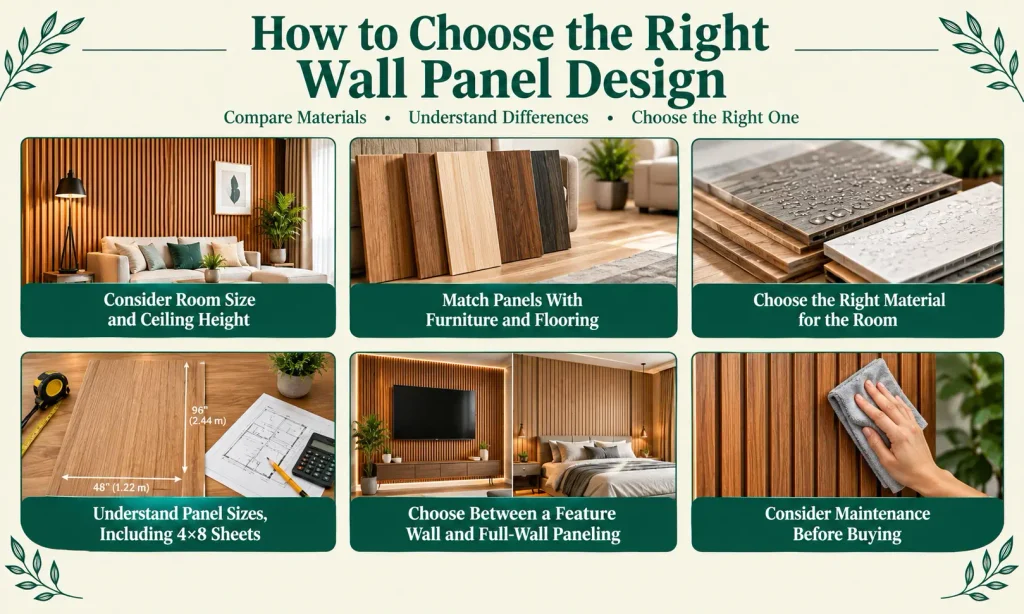
Choosing a design becomes easier when you consider the room, material, maintenance needs, and overall budget together.
Consider Room Size and Ceiling Height
Vertical lines can draw attention upward, while horizontal lines can emphasize width. Light finishes often feel less visually heavy, but dark panels can work well when balanced with good lighting and suitable furniture.
Use samples to judge the design in the actual room. Check how the panel looks in daylight and under the lights you normally use.
Match Panels With Furniture and Flooring
You do not need every wood finish to match. Instead, choose finishes with compatible undertones and repeat a few colors across the room.
If your flooring has strong grain, a simpler panel may provide better balance. If the furniture is plain, a textured feature wall may add interest.
Consider the furniture layout, too. A panel pattern should not be awkwardly hidden behind large pieces of furniture unless that arrangement is part of the design.
Choose the Right Material for the Room
Think about moisture, heat, dust, cleaning, and everyday use before selecting a panel. A material suitable for a dry bedroom may not be suitable for a shower area or a wall close to a heat source.
Read the product instructions and confirm the approved uses. If the room has a known moisture problem, fix the cause before installing decorative finishes.
Understand Panel Sizes, Including 4×8 Sheets
A nominal 4×8-foot panel measures 48 by 96 inches, or about 1.22 by 2.44 metres. Actual product dimensions may differ.
Measure the wall width and height, subtract openings where appropriate, and calculate coverage using the actual sheet size. Allow extra material for cuts, pattern matching, and waste.
Plan where the joins will fall before installation. This is particularly important on large walls, around windows, and behind televisions or furniture.
Choose Between a Feature Wall and Full-Wall Paneling
A feature wall can add interest without making the room feel busy. Full-wall paneling may work well when the material and pattern are restrained and the room’s proportions support it.
Decide where the wall treatment will begin and end, and how its edges will be finished. A clear layout helps prevent the final result from looking incomplete.
Consider Maintenance Before Buying
Some panels need little more than occasional dusting, while others require special cleaning or more careful handling. Deep grooves, natural wood, and fabric surfaces may need extra attention.
Choose a finish that matches the time and care you are willing to provide. A decorative wall should remain practical after installation.
Wall Panel Decor Color Ideas
Color changes how a panel wall looks and how it relates to the rest of the room. Consider your flooring, furniture, natural light, and existing wall colors before choosing a finish.
- White wall panels: Work well with light interiors and classic molding.
- Black wall panels: Create strong contrast and can frame a media wall.
- Gray wall panels: Offer a neutral option for modern spaces.
- Pink wall panels: Can create a soft look in bedrooms or creative spaces.
- Green wall panels: Pair naturally with wood tones and neutral fabrics.
- Gold accents: Add warmth when used sparingly with wood, cream, or dark finishes.
- Natural wood: Brings visible grain and warmth without relying on a strong paint color.
How to Choose a Panel Color
If the room receives limited daylight, test lighter finishes before committing to a dark panel across a large area. In brighter rooms, deeper colors can provide contrast when balanced with the rest of the interior.
Use sample boards where possible. Check them during the day and at night because lighting can change how a color appears.
You can also repeat a panel color in smaller details, such as cushions, curtains, rugs, or decorative objects. This helps the room feel connected without making every surface identical.
DIY Wall Panel Decor: Planning and Installation Basics
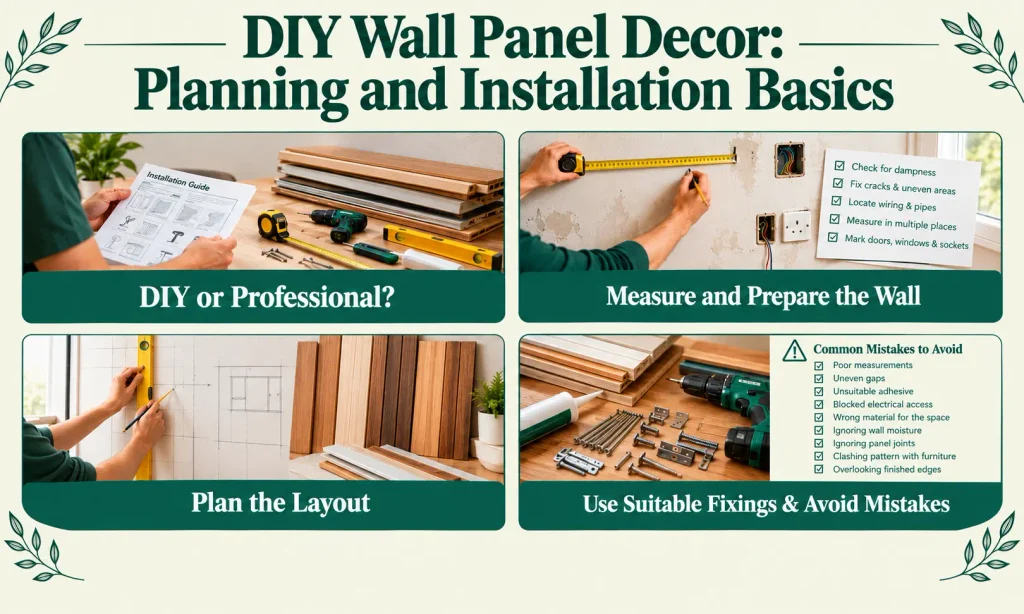
Some decorative wall panels are suitable for confident DIY projects, while heavier panels, complex layouts, and work involving electrical changes may require professional help.
Before starting, read the manufacturer’s instructions and confirm that you have the right tools, fixing materials, and wall preparation method.
Mix mirrors with paintings, prints, and decorative accents using these wall art decor ideas to create a more personalized wall display.
Measure and Prepare the Wall
Check the wall for dampness, loose paint, cracks, and uneven areas. Repair problems before installing panels. Locate wiring and pipes before drilling or cutting.
Measure the wall in more than one place if it is not perfectly square. Record the position of doors, windows, sockets, switches, and other features that may affect the layout.
Plan the Layout
Mark the panel positions, spacing, corners, sockets, and edges. Dry-fit pieces where possible to see how the pattern will look before applying adhesive or fasteners.
Plan how the design will meet the ceiling, floor, adjacent walls, and door frames. Check whether trim or corner pieces are needed to create a neat finish.
Use Suitable Fixings
Different materials and panel weights require different fixing methods. Some panels may use adhesive, while others require screws, clips, framing, or a combination of methods.
Do not assume that one adhesive or fixing method suits every panel. Follow the product instructions and confirm that the wall surface is appropriate for the selected system.
Avoid Common Installation Mistakes
Common problems include poor measurements, uneven gaps, unsuitable adhesive, blocked electrical access, and using a material in a space for which it is not designed.
Other mistakes include ignoring wall moisture, failing to plan panel joints, choosing a pattern that clashes with the furniture, and overlooking how the finished edges will look.
Follow the panel manufacturer’s instructions. Hire a professional for complex layouts, heavy panels, wet areas, or work involving electrical changes.
Wall Panel Maintenance and Durability
Wall panels can remain attractive when they are cleaned and maintained according to the material and the manufacturer’s instructions. The right approach depends on the surface finish, room conditions, and how often the wall is used.
Cleaning Different Panel Materials
- Smooth PVC panels: Dust with a soft cloth and use only a cleaner approved for the finish.
- Painted MDF panels: Use a gentle cleaning method and avoid soaking the surface, especially around exposed edges.
- Natural wood panels: Follow the finish-specific care instructions and avoid excess moisture.
- Fabric acoustic panels: Use the recommended vacuuming or fabric-cleaning method and check the care label.
- Textured or carved panels: Use a soft brush or suitable cleaning tool to remove dust from grooves and detailed areas.
Test a cleaning product on a small, less visible area first if the manufacturer’s instructions permit it.
How to Keep Wall Panels in Good Condition
Check panels occasionally for loose edges, damaged finishes, moisture marks, or gaps that may need attention. Address the cause of any moisture before repairing the decorative surface.
Avoid placing panels in conditions beyond their approved use. Suitable installation, regular care, and prompt repairs can help preserve their appearance over time.
Before You Buy: Wall Panel Planning Checklist
Use this checklist before ordering panels or arranging installation.
- Measure the wall width and height.
- Record doors, windows, sockets, switches, and other obstacles.
- Choose between a feature wall and full-wall paneling.
- Compare materials based on appearance, room suitability, and maintenance.
- Check the manufacturer’s instructions and product ratings.
- Calculate the required panel coverage and allow for cutting waste.
- Include preparation, labor, trim, paint, and finishing in the budget.
- Plan the panel joints, corners, and edges.
- Arrange lighting and electrical work before fitting panels.
- Confirm how the finished wall will be cleaned and maintained.
Completing these checks can help reduce avoidable waste, improve the final finish, and make the project easier to manage.
Are Paneled Walls Still in Style?
Paneled walls remain a useful interior design choice because they can add texture, structure, and warmth. Traditional framed panels, natural wood finishes, fluted surfaces, and simple geometric designs offer different ways to suit a home’s existing style.
The most lasting approach is to choose a design that works with your home rather than following every new look. A simple wood feature wall or well-proportioned painted molding may remain appealing longer than a very bold pattern used throughout a room.
Think about the room’s proportions, the furniture, and how easy the finish will be to maintain. A well-planned design is more useful than a trend that does not suit the space.
Frequently Asked Questions About Wall Panel Decor
What Are the Current Wall Decor Trends?
Popular wall panel styles include natural wood finishes, fluted panels, sculptural textures, painted molding, and carefully planned feature walls. Choose a style that suits your room and personal taste rather than changing your entire home around a trend.
What Are Some Good Decorative Panels for Interior Walls?
Wood, veneer, MDF, PVC, WPC, gypsum, and fabric-covered acoustic panels are common options. The best choice depends on the room, moisture exposure, maintenance needs, budget, and desired appearance.
What Is Decorative Wall Paneling Called?
It may be called wall cladding, architectural paneling, or feature-wall paneling. Specific styles include wainscoting, beadboard, shiplap, board and batten, raised panels, and fluted panels.
Are Paneled Walls Coming Back in Style?
Paneled walls suit both traditional and modern interiors. Classic molding, natural finishes, and simpler panel profiles can be adapted to different homes. The best design is one that works with the room and its existing features.
Are Wall Panels Suitable for Small Rooms?
Yes. Slim profiles, light colors, and a carefully chosen feature wall can work well in smaller rooms. Large or highly detailed panels may feel heavy if the room has limited light or little open space.
Can Wall Panels Be Installed Over Existing Walls?
Some panels can be installed over sound, clean, dry surfaces. The wall must be suitable for the fixing method, and dampness, loose paint, and uneven areas should be addressed first. Follow the product instructions before installation.
Do Wall Panels Make a Room Soundproof?
Not by themselves in most cases. Some acoustic panels absorb sound inside a room, but soundproofing requires a suitable wall assembly designed to limit sound passing between spaces.
How Do You Clean Decorative Wall Panels?
Use the cleaning method recommended for the material. Smooth finished panels may need only a soft cloth and a suitable cleaner, while fabric and natural wood may require special care. Avoid harsh products unless they are approved for the finish.
Are PVC Wall Panels Waterproof?
Not necessarily. Some PVC panels are designed for moisture-prone areas, but the suitability of the complete installation depends on the product, joints, edges, and installation system. Follow the manufacturer’s instructions and do not assume decorative panels replace required waterproofing.
Are Peel-and-Stick Wall Panels Easy to Remove?
Some are designed for easier removal, but results depend on the adhesive, wall paint, surface condition, and how long the panels have been installed. Test a small area and check the removal instructions, especially in rental properties.
How Much Does Wall Panel Decor Cost?
The total cost depends on the panel material, wall area, design complexity, labor, surface preparation, finishing, and any added lighting. Measure the wall and request itemized quotations to compare the complete project cost.
Can I Install Wall Panels Myself?
Some lightweight panels and simple layouts may be suitable for DIY installation. Heavy panels, complicated designs, wet areas, and projects involving electrical changes may require professional assistance. Always follow the manufacturer’s installation instructions.
Which Wall Panel Design Is Best for a Living Room?
Wood, fluted, slatted, painted molding, and selected 3D panels can all suit living rooms. Consider the room size, television placement, furniture, lighting, and maintenance needs before choosing a design.
Final Thoughts
Wall panel decor can change the feel of a room without requiring a full renovation. Wood panels add warmth, fluted designs bring texture, painted molding creates a classic finish, and 3D panels make a stronger statement.
The best result comes from choosing a style that suits the room and a material that fits its practical needs. Compare the options, plan your layout, measure carefully, and include installation and maintenance in your budget.
Before buying, check the panel specifications and make sure the material is suitable for the intended location. With thoughtful planning, wall panel decor can create an attractive feature that works with your furniture, lighting, and everyday life.
Pingback: 25 Bathroom Wall Decor Ideas for a Modern Look 2026
Pingback: Kitchen Wall Decor | 20 Stunning Ideas for a Stylish Home 2026
Pingback: Dining Room Wall Decor | 25 Gorgeous Ideas 2026
Pingback: Boho Wall Decor | Stunning Ideas for a Cozy Home 2026