
Dining room wall decor can make a simple eating area feel warm, inviting, and complete. The right wall art, mirrors, wood panels, shelves, or decorative accents can bring more character to your room without changing the furniture. The key is to choose pieces that suit your dining table, available wall space, lighting, and personal style.
Whether you have a small dining nook, a modern open-plan room, or a large dining area, there are plenty of ways to decorate your walls. You can create a focal point behind the dining table, add a mirror to reflect natural light, or use textured finishes to give plain walls more interest.
The best results come from balancing size, color, texture, and spacing. You do not need to fill every wall. A few well-chosen pieces can make your dining room look more organized and comfortable.
Table of Contents
What Is the Best Dining Room Wall Decor?
The best dining room wall decor depends on your room size, furniture, lighting, and preferred style. Large framed artwork works well above a dining table or sideboard, while mirrors can make a small room feel brighter. Wood panels add warmth, gallery walls bring personality, and painted accent walls create a clear focal point. For a balanced look, choose decor that fits the wall and complements the dining furniture rather than competing with it.
Create an inviting dining space with these wall art decor ideas featuring framed prints, paintings, and artwork that complement your dining table and room colors.
Modern Dining Room Wall Decor Ideas
Modern dining room wall decor often combines simple shapes, clean lines, and a limited color palette. Instead of covering every wall, focus on one or two features that make the room feel finished.
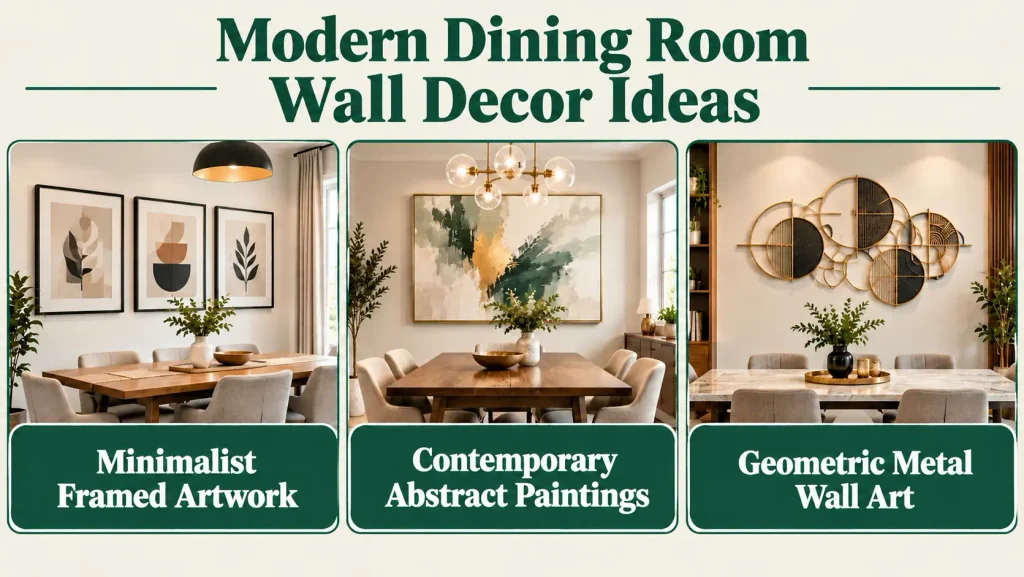
Minimalist Framed Artwork
Minimalist artwork is a good choice if you prefer a clean and uncluttered dining room. Look for abstract shapes, simple line drawings, or prints with open space and a few colors.
Choose frames that match your dining furniture or other finishes in the room. Black frames work well with light walls, while natural wood frames add warmth. A single large print can look more balanced than several small pieces scattered across the wall.
Contemporary Abstract Paintings
Abstract paintings can introduce color and movement without relying on a specific subject. Soft curves, layered brushstrokes, and geometric forms can work with modern dining tables and simple chairs.
For a calm setting, choose artwork with cream, beige, gray, or muted green tones. If your furniture is neutral, a painting with a stronger accent color can give the room more energy.
Before choosing a piece, compare its main colors with your table, chairs, curtains, and rug. The artwork does not need to match every item, but it should feel connected to the room.
Geometric Metal Wall Art
Metal wall art adds shape and texture without taking up floor space. Geometric designs suit contemporary dining rooms, especially when the furniture has straight lines or simple finishes.
Black metal creates a strong contrast against white or cream walls. Brass or gold-toned pieces can add warmth, while brushed metal offers a more understated look.
Check the size and depth of the piece before buying it. Large metal designs can extend away from the wall, so leave enough room around doors, light fixtures, and nearby furniture.
Elegant Dining Room Wall Decor Ideas
Elegant dining room wall decor does not have to be expensive or overly decorative. A balanced layout, thoughtful materials, and a few well-placed details can create a refined look.
Add depth and texture to your dining area with these wall panel decor ideas that can create an attractive feature wall behind your dining table.
Large Framed Artwork
A large framed painting or print can become the main feature of your dining room. Landscapes, abstract compositions, botanical prints, and still-life artwork are all suitable choices.
For a long dining table, horizontal artwork often works well because it follows the shape of the furniture. A vertical piece can suit a narrow wall or a dining area with higher ceilings.
As a starting point, choose artwork that is around two-thirds to three-quarters of the width of the furniture beneath it. This is a useful guideline rather than a strict rule. The wall size, frame thickness, and overall layout also matter.
Gold and Brass Wall Accents
Gold and brass accents can add warmth to a dining room without making it feel too formal. Consider a round metal wall sculpture, a thin metallic frame, or a decorative sunburst design.
These finishes work especially well with cream, white, dark green, navy, and warm gray walls. Repeat the same finish in a light fixture, cabinet handle, or small accessory to create a connected look.
Avoid placing too many shiny pieces together. One or two metallic accents usually provide enough contrast while allowing the artwork and furniture to remain the focus.
Decorative Wall Molding
Wall molding adds structure and visual interest to plain walls. Rectangular panel designs suit traditional and transitional dining rooms, while simple narrow molding can work in more modern spaces.
You can paint the molding the same color as the wall for a subtle effect. For a stronger feature, use a contrasting shade or a deeper color behind the dining table.
Plan the layout before installation. The panels should relate to the table and wall dimensions, and they should not look squeezed around windows, switches, or door frames.
Farmhouse and Rustic Dining Room Wall Decor
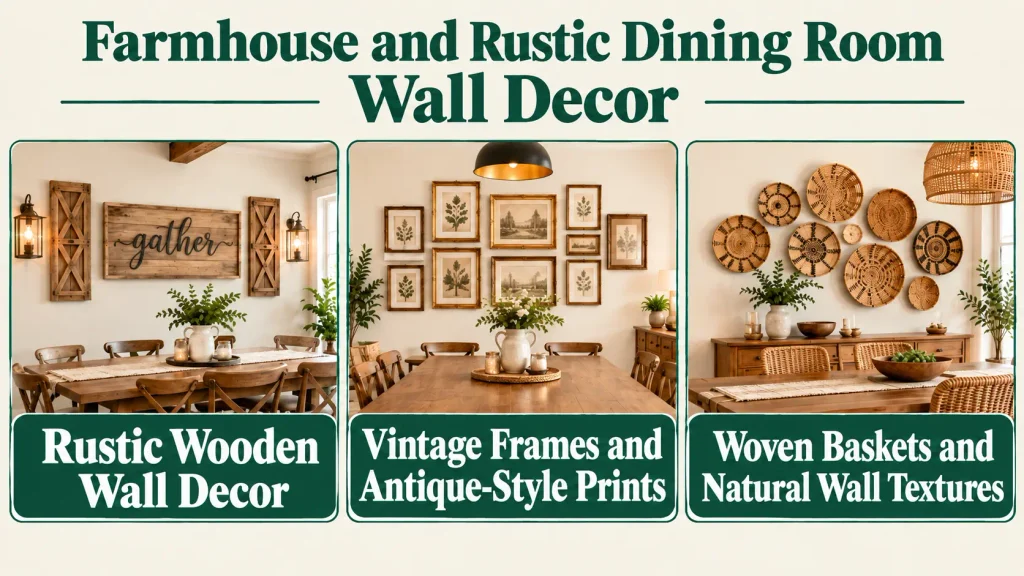
Farmhouse and rustic styles use natural materials, warm colors, and simple decorative pieces. The goal is to make the dining room feel comfortable rather than overly arranged.
Rustic Wooden Wall Decor
Wooden wall signs, carved panels, and reclaimed wood arrangements can add texture to a farmhouse dining room. Natural grain patterns also work well with wooden tables and woven chairs.
Choose wood finishes that complement your furniture instead of trying to match every shade exactly. A slightly lighter or darker tone can create a more natural result.
If you use reclaimed wood, check that it is clean, stable, and free from loose pieces before hanging it. Heavy wooden decor needs suitable wall fixings.
Vintage Frames and Antique-Style Prints
Vintage-style frames bring character to dining rooms with traditional furniture, wooden tables, or warm neutral colors.
You can arrange botanical illustrations, old-style landscape prints, architectural drawings, or food-related artwork in a group. Use frames in similar finishes to keep the display connected.
For a more relaxed look, mix two or three frame sizes. Keep the overall arrangement within an imaginary outline so the collection feels organized rather than scattered.
Woven Baskets and Natural Wall Textures
Woven baskets add texture and an informal feel to a dining room. Choose pieces in different sizes and arrange them in a balanced group above a sideboard or on an open wall.
Natural fibers pair well with wood, linen, rattan, and other earthy materials. You can use a mix of round and oval shapes, but keep some space between the pieces so each one remains visible.
Avoid hanging baskets too close to areas where chairs move frequently. Check that the hooks are secure and suitable for the weight of each item.
Make your dining room feel more personal with these wall hanging decor ideas that bring texture and character to empty walls.
Small Dining Room Wall Decor Ideas
Small dining rooms need decor that makes good use of limited space. Large pieces can still work, but the layout should feel intentional and leave enough visual breathing room.
Round Mirrors to Reflect Light
A round mirror can soften the straight lines of a dining table and chairs. It can also reflect daylight from a nearby window, helping the room feel brighter.
Place the mirror where it reflects an attractive view, a light source, or another part of the room you want to highlight. Avoid positioning it where it mainly reflects clutter or a busy doorway.
Choose a frame that suits the space. A thin frame feels light and simple, while a thicker wood or metal frame creates a stronger focal point.
Vertical Artwork for Narrow Walls
Vertical artwork can make good use of a narrow wall beside a doorway or window. A tall botanical print, an abstract painting, or two smaller pictures stacked vertically can fit where a wide piece may feel crowded.
Keep the artwork in proportion to the wall. A piece that is too narrow may look lost, while one that is too large can make the area feel cramped.
If you use two prints, keep a consistent gap between them and align their edges. This gives the arrangement a neat appearance.
Floating Shelves for Useful Display Space
Floating shelves provide a place for small framed prints, plants, ceramics, and decorative objects. They are useful when you want a display that can change with the seasons.
Place a larger item toward one end and balance it with two or three smaller pieces. Leave some empty space rather than filling the full length of each shelf.
For a small dining room, use shallow shelves and avoid projecting them into chair movement areas. Install them with fixings suited to the wall material and the total weight of the display.
Large Dining Room Wall Decor Ideas
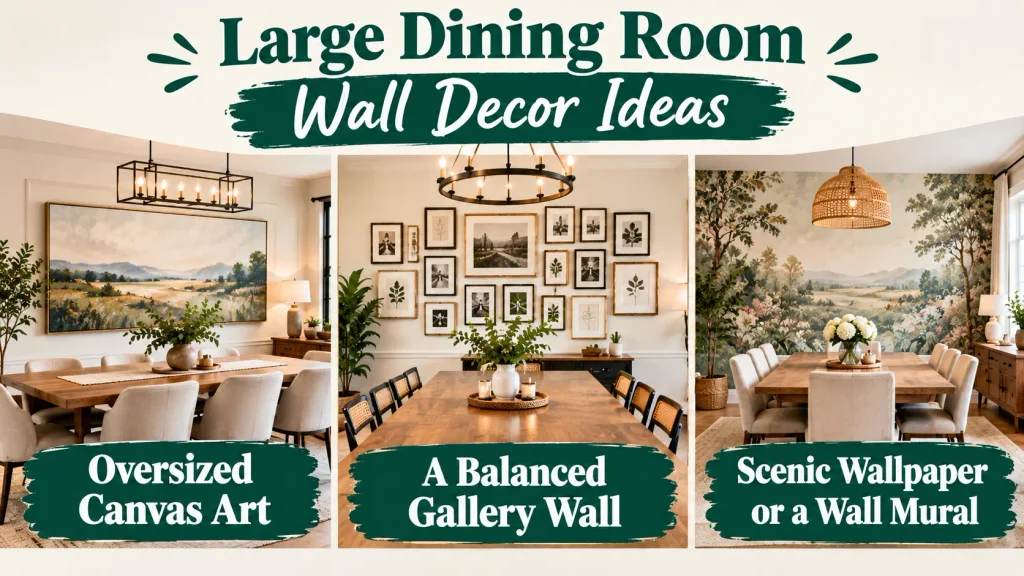
Large dining rooms often have wide, empty walls that can make the furniture feel disconnected. Bigger artwork, repeated shapes, and carefully planned groups can help bring the space together.
Oversized Canvas Art
An oversized canvas can fill a wide wall without the need for several smaller decorations. Abstract art, landscapes, botanical scenes, and simple color-based designs are all suitable options.
Measure the wall before choosing the canvas. Compare its width with the dining table or sideboard so the artwork looks connected to the furniture rather than floating by itself.
For a large open-plan room, choose a piece with colors that appear elsewhere in the dining area. This helps define the dining zone without requiring a physical divider.
A Balanced Gallery Wall
A gallery wall lets you combine family photographs, paintings, line drawings, and decorative prints. It works especially well when you want the dining room to feel personal.
Start by arranging the frames on the floor. Try a symmetrical grid for a formal look or a more relaxed arrangement with mixed sizes. Once you are happy with the layout, trace paper templates and tape them to the wall.
Keep the gaps between frames consistent, usually around two to three inches as a starting point. Smaller frames may need slightly tighter spacing. Step back and check the full arrangement from the dining table before making holes.
Scenic Wallpaper or a Wall Mural
Scenic wallpaper and murals can turn a plain dining room wall into a feature. Botanical patterns, soft landscapes, abstract scenes, and subtle nature-inspired designs can add depth and color.
Use the design on one main wall if the room already contains patterned curtains, a detailed rug, or colorful furniture. A quieter design may suit a smaller room better than a large, high-contrast pattern.
Before installation, check the wall surface and measure around sockets, switches, and trim. The main part of the design should be visible rather than hidden behind a cabinet or large piece of furniture.
Dining Room Wall Decor with Mirrors
Mirrors are useful when you want to add light, create a focal point, or balance a wall with large furniture. Their shape and placement matter as much as their frame.
Large Rectangular Mirror Above a Sideboard
A rectangular mirror works well above a long sideboard because the two pieces share a similar shape. This arrangement can make a dining room feel more open while giving the wall a clear center.
Choose a mirror that is narrower than the sideboard and leave enough space between the top of the furniture and the bottom of the frame. The exact gap depends on the size of the mirror and the height of the furniture.
Make sure the mirror is fixed securely, especially if it has a heavy frame. Use suitable anchors or wall studs where required.
For inspiration in another part of your home, browse these 25 bedroom wall decor ideas and adapt the styles you like to your dining area.
Dining Room Wall Art and Picture Ideas
Artwork can set the mood of a dining room. It may be calm and natural, bold and colorful, or personal and family-focused.
Botanical and Landscape Prints
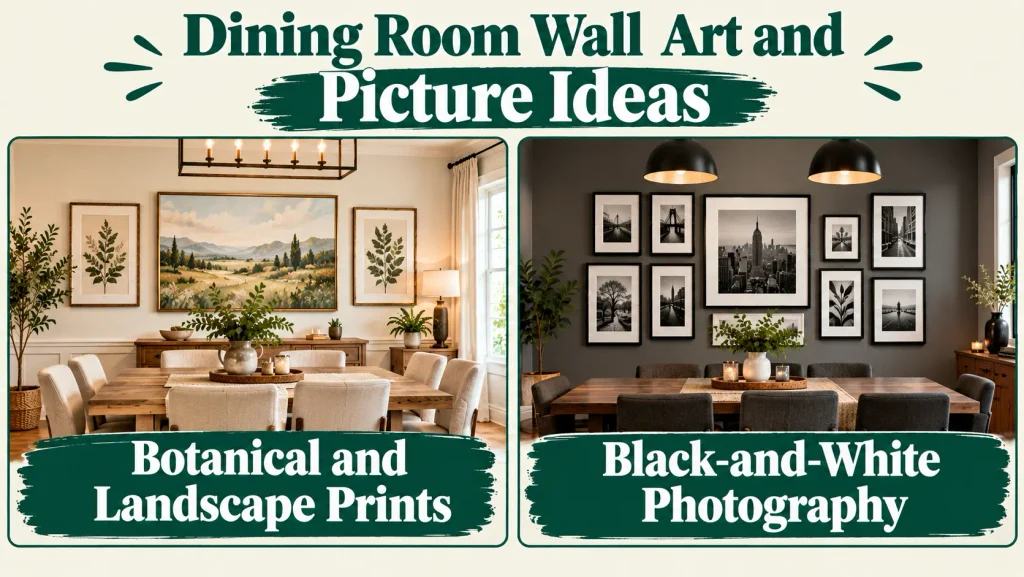
Botanical prints and landscape paintings bring natural colors into the dining area. Green leaves, garden scenes, coastal views, and soft countryside landscapes work well with wood furniture and neutral walls.
Use one large print for a simple layout or a pair of related prints for a wider wall. If you prefer a collection, keep the colors or frame finishes connected.
These designs are also useful when the dining room has limited natural texture. Artwork can add a sense of nature without taking up space with extra furniture.
Black-and-White Photography
Black-and-white photography offers a simple way to add contrast. Architectural photographs, city scenes, nature images, and personal photographs can all work well.
Use matching frames if you want a formal display. For a more relaxed arrangement, vary the frame sizes but keep the images within a consistent color palette.
On a light wall, black frames create a clear outline. On a dark wall, consider white mats or lighter frames so the pictures remain easy to see.
Wall Decor Behind the Dining Table
The wall behind the dining table is often the natural focal point of the room. It deserves attention, but the decor should not make the area feel crowded.
One Statement Piece Above the Table
A single statement piece creates a simple, clear focal point. It could be a large painting, a sculptural metal design, a framed textile, or a decorative wood panel.
Center the piece in relation to the table or the main dining arrangement. If the table is placed against a wall, use the table as the main reference rather than centering the artwork across the entire room.
As a general starting point, hang artwork so its lower edge sits about six to ten inches above the table or sideboard. Adjust this distance for tall centerpieces, chair backs, frame size, and sightlines. The artwork should feel connected to the furniture without interfering with everyday use.
Dining Room Accent Wall Ideas
An accent wall adds a different color or surface to one part of the dining room. It can define the dining area in an open-plan layout or give a plain room more character.
A Painted Accent Wall
Paint is one of the simplest ways to change the look of a dining room. Deep green, muted blue, warm terracotta, charcoal, and soft beige can all work, depending on the room’s light and furniture.
Test a few paint samples before choosing a color. Look at them during the day and in the evening because natural light and dining room lighting can change how a shade appears.
If you choose a strong wall color, keep some nearby elements simple. Neutral artwork, natural wood, and understated accessories can help balance the room.
Wood Slat and Decorative Wall Panels
Wood slats and decorative wall panels add depth through lines, shadows, and texture. Vertical slats can emphasize ceiling height, while larger panel designs create a more structured appearance.
For a modern dining room, choose a simple finish with minimal decoration. For a warmer interior, natural wood tones can work well with cream walls and soft lighting.
Consider maintenance before choosing a panel material. Dust can collect in narrow grooves, and some finishes may be harder to clean than a flat painted wall. Keep panels away from sources of excessive heat or moisture unless the material is suitable for that setting.
Creative Dining Room Wall Decor Ideas
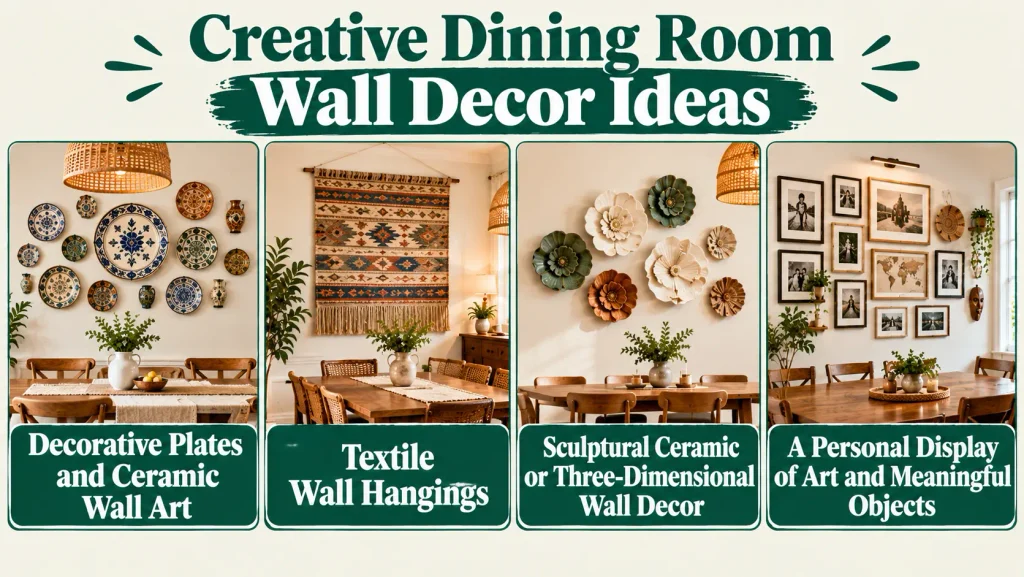
Not every dining room needs framed art. Decorative objects and unusual materials can create a more personal display when used with care.
Decorative Plates and Ceramic Wall Art
Decorative plates and ceramic pieces add shape, pattern, and texture to an empty wall. They can suit traditional, country-inspired, eclectic, or contemporary rooms depending on the colors and arrangement.
Lay out the pieces before hanging them. Start with the largest plate near the center and arrange smaller ones around it, keeping the overall shape balanced.
Use secure plate hangers or mounting systems designed for the items. Do not rely on weak adhesive hooks for heavy ceramics, especially above seating areas.
Textile Wall Hangings
Woven wall hangings, embroidered pieces, and framed fabric add a softer surface than glass, metal, or wood. They can help a dining room feel warm and relaxed.
Choose a textile with colors that relate to the curtains, rug, or seat cushions. A large woven piece can work on its own, while a smaller one may suit a gallery wall.
Keep fabric decor away from open flames, cooking heat, and areas where it may be splashed or stained. Check the cleaning instructions before buying a piece for a frequently used dining area.
Sculptural Ceramic or Three-Dimensional Wall Decor
Sculptural wall decor adds depth and shape to a plain wall. Raised geometric forms, ceramic flowers, abstract pieces, and layered designs can work well when you want something different from a flat print.
Use this style on a wall with enough open space to show the shadows and details. A simple background usually helps the shapes stand out.
Check the projection and weight before installation. Avoid placing pieces where people may bump into them while moving chairs or walking around the table.
A Personal Display of Art and Meaningful Objects
A dining room can feel more welcoming when its wall decor reflects the people who use it. Family photographs, travel prints, handmade art, and meaningful keepsakes can make the room feel less like a showroom and more like home.
Choose a theme to keep the display connected. For example, use photographs from family trips, prints of favorite places, or handmade objects in a shared color palette.
Leave space between the items and avoid adding too many unrelated pieces. A personal collection works best when each object has room to be seen.
Carry a consistent decorating style throughout your home with these kitchen wall decor ideas that can help connect your kitchen and dining space.
Dining Room Wall Decor Trends for 2026
Dining room design continues to make room for personal style, natural textures, and materials that add depth. Rather than following every new look, choose trends that suit your home and will still feel comfortable over time.
Natural Materials and Organic Shapes
Wood, woven fibers, ceramic pieces, and irregular mirror shapes can make a dining room feel warmer. These materials work well with neutral paint, wooden furniture, and simple lighting.
Try one or two natural finishes instead of combining every texture in the same room. This keeps the look balanced.
Textured Walls and Panel Details
Decorative wall panels, wood slats, textured paint, and subtle plaster-style finishes add interest without relying on extra objects. They are useful when you want the wall itself to become part of the design.
Use texture where it can be seen clearly, such as behind the dining table. Consider the cleaning needs and installation cost before choosing a finish.
Artwork with Stronger Personality
Large abstract paintings, expressive photography, and handmade pieces can give a dining room a more personal look. Art does not need to match the furniture exactly, but its colors and scale should work with the space.
If you are unsure, start with artwork that uses one or two colors already present in the room.
Warm Neutrals and Rich Accent Colors
Cream, warm beige, earthy brown, olive green, muted blue, and terracotta can create a welcoming setting. Darker shades may work well in rooms with good lighting, while lighter colors can help a compact space feel open.
Test paint samples in your actual room before committing to a full wall.
Personal and Flexible Displays
Gallery walls, small shelves, and collections of framed prints allow you to change the decor over time. This can be useful if your taste changes or you enjoy displaying seasonal artwork.
Keep the main arrangement stable and change only a few pieces when you want a fresh look.
These are useful design directions to consider, not rules that every dining room needs to follow. Choose the materials and colors that fit your space, budget, and daily routine.
How to Choose the Best Dining Room Wall Decor
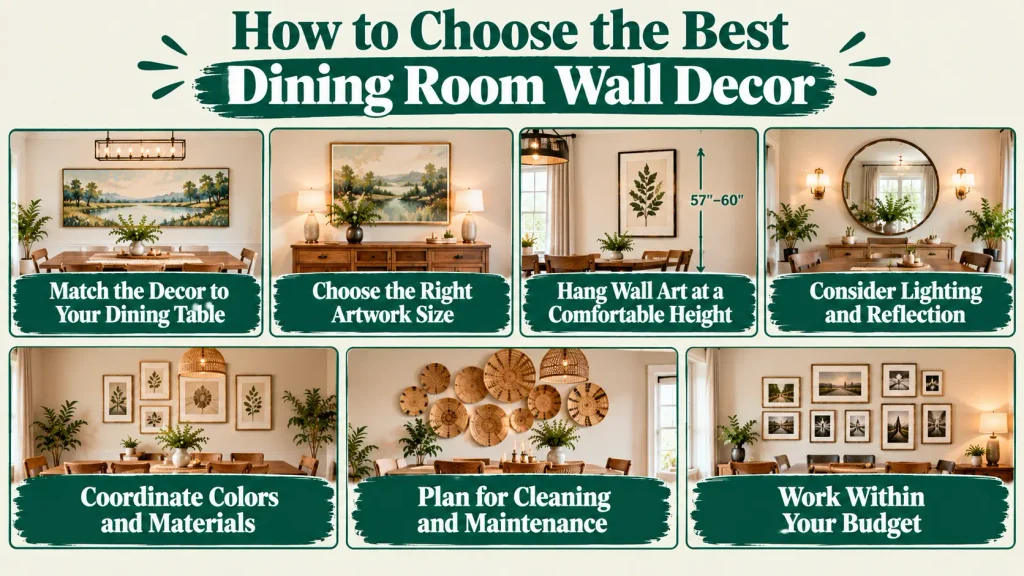
The right choice depends on more than appearance. Wall size, furniture shape, lighting, and how you use the room all affect the final result.
Match the Decor to Your Dining Table
A rectangular table often pairs well with horizontal artwork or a balanced row of frames. A round table can work with a round mirror, a centered painting, or a compact arrangement of decorative objects.
For a long table, avoid choosing artwork that looks too small for the wall. For a small round table, a very wide arrangement may feel out of proportion.
Use the table as a reference point, but also check how the decor looks from the entrance and other parts of the room.
Choose the Right Artwork Size
For artwork above a sideboard or other furniture, a useful starting point is a width of about two-thirds to three-quarters of the furniture width. For example, a 60-inch-wide sideboard could suit artwork around 40 to 45 inches wide.
This is a guide, not a fixed requirement. A gallery wall may need a wider overall arrangement, while a narrow wall may call for a smaller piece.
| Wall or furniture situation | A useful starting point |
| Artwork above a sideboard | Around two-thirds to three-quarters of the sideboard width |
| Large wall behind a long table | One substantial piece or a balanced group of pieces |
| Narrow wall section | One vertical print or a small stacked arrangement |
| Small dining nook | One clear focal point rather than many scattered objects |
| Gallery wall | Plan the full outside shape before choosing individual frame positions |
Always measure the available wall and account for doors, windows, switches, and furniture. The proportions should look right in your room rather than simply follow a measurement.
Hang Wall Art at a Comfortable Height
Artwork should be easy to view while sitting and standing. In many rooms, the center of a picture is placed around 57 to 60 inches from the floor, but artwork above furniture may need to sit lower to look connected to it.
Above a dining table or sideboard, leave a clear gap between the furniture and the frame. Around six to ten inches is a useful starting point, but the ideal distance depends on the size of the piece and the furniture beneath it.
Before drilling, tape a paper template to the wall. Sit at the table and check whether the artwork feels too high, too low, or too close to nearby objects.
Consider Lighting and Reflection
A mirror can reflect daylight and help a small room feel brighter. However, a mirror that reflects a cluttered corner or a strong light directly into someone’s eyes may be distracting.
Artwork also looks different under warm or cool lighting. Check the wall in daylight and after the dining lights are switched on. If the wall is dim, choose colors and finishes that remain clear in the evening.
Coordinate Colors and Materials
Your wall decor should relate to the table, chairs, rug, curtains, and light fixtures. You do not need to match every finish, but repeating one or two colors or materials can help the room feel connected.
For example, a wood frame can relate to a wooden table, while black artwork frames can echo dark chair legs or a light fixture.
If the room already has a patterned rug or colorful chairs, consider simpler wall decor. If the furniture is plain, the wall can carry more color or texture.
Plan for Cleaning and Maintenance
Dining rooms are used every day, so wall decor should be easy to maintain. Flat artwork, sealed wood panels, and washable painted surfaces may be easier to care for than delicate materials.
Keep fragile pieces away from chair backs and busy walkways. For textured panels or woven displays, consider whether dust can be removed without difficulty.
Work Within Your Budget
You can improve a dining room wall without buying expensive artwork or making major changes. Try rearranging existing frames, creating a gallery from personal photographs, painting one wall, or adding a small group of decorative plates.
For rented homes, removable wall decor may be useful, but always check the product’s weight limits and the wall surface. Adhesive products are not suitable for every paint finish or wall material.
Explore these living room wall decor ideas for creative ways to style large and small walls with artwork, panels, and decorative accents.
Budget-Friendly and Renter-Friendly Dining Room Wall Decor
If you have a limited budget or cannot make permanent changes, focus on decor that can be moved or replaced easily.
- Create a print gallery: Use personal photographs, original drawings, or affordable prints in frames with a shared finish.
- Reuse existing decor: Move artwork from another room and test different arrangements before buying anything new.
- Use removable wall accents: Choose suitable removable decals or lightweight decor, following the instructions for your wall type.
- Add a small display shelf: A shelf can hold a few changing decorative objects, provided it is safely installed and permitted in your home.
- Refresh the wall with paint: If painting is allowed, a single accent wall can change the room without requiring new furniture.
- Choose one focal piece: One well-sized print or mirror can have more impact than several inexpensive items that do not work together.
Before spending money, measure the wall and decide what the room needs. You may only need a single focal point rather than a full wall arrangement.
How to Install Dining Room Wall Decor Safely
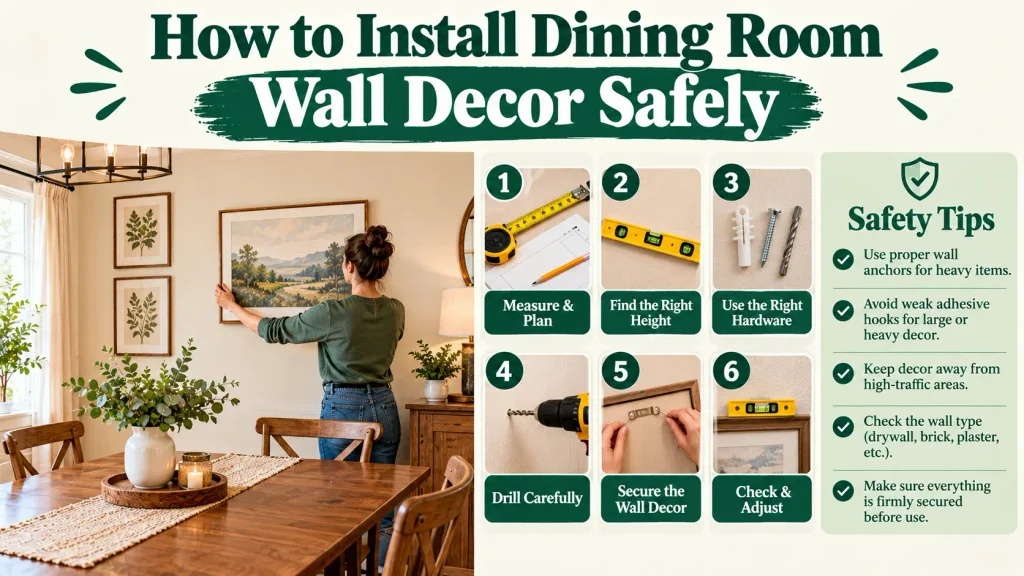
Good placement matters, but secure installation matters just as much. Heavy mirrors, wood panels, ceramics, and metal pieces need fixings that suit their weight and the wall material.
Follow these steps before hanging your decor:
- Measure the wall and furniture. Mark the area where the piece will sit and check that it will not conflict with doors, switches, or nearby lights.
- Test the arrangement. Use paper templates or painter’s tape to preview the size and position before making holes.
- Check the wall material. Plasterboard, masonry, and other wall types may require different anchors or fixings.
- Find suitable support. Use wall studs or rated anchors when needed, especially for heavy pieces.
- Check the finished position. Make sure the item is level, secure, and not in the way of moving chairs or people walking through the room.
If you are unsure whether a wall can safely support a heavy mirror or panel, seek appropriate installation help. Do not rely on a small nail or adhesive strip for a piece that exceeds its stated weight limit.
Common Dining Room Wall Decor Mistakes to Avoid
Even attractive decor can look out of place if the size, position, or arrangement is wrong. A few simple checks can help prevent common problems.
Choosing Artwork That Is Too Small
A small picture may disappear on a large wall, especially above a long dining table. Consider a larger piece or a group of frames that creates a wider overall arrangement.
Hanging Artwork Too High
When artwork sits far above the furniture, it can feel disconnected from the dining area. Try a paper template and check the position from a seated view before drilling.
Filling Every Empty Space
Decorating every wall can make a dining room feel busy. Choose one main feature and leave some walls or areas clear so the room can breathe.
Mixing Too Many Styles
Rustic wood, shiny metal, ornate frames, bold patterns, and several unrelated colors can compete for attention. Choose a few materials and repeat them in different parts of the room.
Ignoring Furniture and Chair Movement
Decor that is too low, too deep, or too close to a chair can be bumped during daily use. Check the full movement area around the table before finalizing the layout.
Forgetting About Lighting
Mirrors can reflect unwanted glare, and dark artwork may be difficult to see in a poorly lit room. Review the arrangement in daylight and in the evening before settling on it.
Frequently Asked Questions About Dining Room Wall Decor
What to Put on the Walls of a Dining Room?
You can use framed artwork, mirrors, gallery walls, decorative plates, wood panels, shelves, wall molding, or textured finishes. Choose pieces that suit your dining table, wall size, lighting, and preferred style. One well-placed focal point is often enough for a small room, while a larger dining area may suit a gallery wall or oversized artwork.
What Are Some Good Wall Designs for a Dining Room?
Good dining room wall designs include painted accent walls, decorative wall molding, wood slat panels, textured finishes, wallpaper, and balanced gallery walls. For a modern look, try simple artwork and clean lines. For a rustic room, consider natural wood and woven decor. The best design is one that works with your furniture and does not make the space feel crowded.
What Are the Dining Room Decor Trends for 2026?
Design directions to consider in 2026 include natural materials, organic shapes, textured walls, expressive artwork, warm neutral colors, and personal displays. Wood panels, sculptural wall pieces, and large artwork can add character. Rather than following every trend, choose elements that suit your room and are easy to maintain.
How High Should You Hang Wall Art in a Dining Room?
For general wall art, the center of the piece is often placed around 57 to 60 inches from the floor. Above a sideboard or dining table, the artwork may need to sit lower so it feels connected to the furniture. A gap of about six to ten inches above furniture is a useful starting point, but adjust it for the size of the artwork and the room layout.
What Size Wall Art Works Best Above a Dining Table?
Artwork around two-thirds to three-quarters of the table width can be a useful starting point, particularly when the table sits against a wall or below the artwork. A wider gallery arrangement may also work. Measure the available wall, consider the table shape, and leave enough space around the art so the arrangement does not feel cramped.
How Can I Decorate a Small Dining Room Wall?
Yes, a mirror can add light and create a sense of openness. It works well above a sideboard or on a wall that reflects a pleasant view. Check what the mirror will reflect before installing it, and use secure fixings suitable for its weight.
Should Dining Room Wall Decor Match the Furniture?
Wall decor does not need to match your furniture exactly. It should relate to the room through color, material, shape, or style. For example, a wood frame can complement a wooden table, while black frames can echo dark chair legs. A little contrast can make the room more interesting without making it feel disconnected.
How Can I Decorate a Dining Room Wall on a Budget?
Start by rearranging artwork you already own, creating a gallery from personal photographs, or painting one accent wall if permitted. Affordable prints, carefully arranged plates, and simple shelves can also add interest. Measure the space first so you buy pieces that fit instead of spending money on decor that looks too small or crowded.
Final Thoughts
Dining room wall decor works best when it supports the way you use the room. A large painting can create a focal point, a mirror can reflect light, and wood panels or textured finishes can add depth. Smaller dining areas often benefit from a simple layout, while larger rooms can accommodate oversized art or a carefully planned gallery wall.
Before choosing your decor, measure the wall, consider the dining table’s shape, check the lighting, and think about maintenance. Use paper templates to test the layout before hanging anything, and make sure every heavy piece is installed securely.
You do not need to decorate every wall or follow every trend. Choose a few pieces that fit your space, bring together your colors and materials, and make your dining room feel welcoming for everyday meals and special occasions.